
999: What's your complaint?
“I’d like to speak to the manager.” “I’d like to make a complaint…” These are phrases you’d expect to hear behind the counter at a fast-food restaurant, in a retail store, or at the reception desk of a hotel.
As a paying customer, you have every right to voice your dissatisfaction with poor service or an unpleasant experience. It makes sense — you’ve spent your hard-earned money and expect a certain standard.
But what if I told you that these same complaints are being directed at paramedics — people who perform life-saving actions in potentially dangerous environments?
Unfortunately, this is the sad reality for many paramedics in the UK.
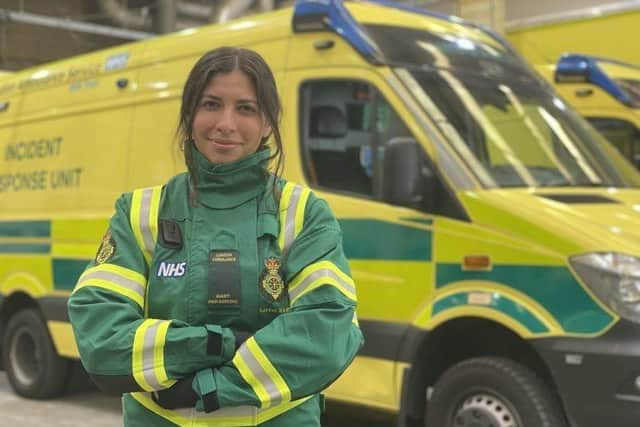

According to a study by the Health and Care Professions Council (HCPC), paramedics in the UK receive a relatively high rate of complaints compared to other regulated professions, with around 11 complaints per 1,000 paramedics. Initially, this statistic shocked me. But after speaking to friends, family, and my partner — all of whom work in ambulance services across the UK — that shock turned into deep disappointment.
Imagine this:
Someone you love gets into an accident — whether minor or potentially life-threatening. You call 999. The paramedics, clad in their signature midnight-green uniforms, hit the accelerator, weaving at frightening speeds through rush-hour traffic and down winding country roads.
In the final hours of a gruelling 12-hour shift during a sweltering summer heat-wave or freezing harsh winter night. They’ve spent years studying and training for every possible scenario. They arrive, calmly and professionally deal with the situation. Whisk them off to hospital so they can receive further medical attention…
And then — after everything — they receive a complaint.
But why?..
Why do so many of our nation’s first responders receive so many complaints?
In today’s climate there are unfortunately some common and seemingly unavoidable complaints:
1. Delayed Response Times & Failure to Transport Patients
One of the most frequent complaints against paramedics (and the NHS as a whole) is delayed response times. But in today’s climate, with increasing demand, staff shortages, and budget cuts, this issue is often unavoidable. Our front-line workers are fighting a constant battle of attrition, and yet, instead of addressing the root causes, the blame often falls on the very people doing the job.
2. Perceived Lack of Compassion or Rudeness
High-stress situations require focus. Paramedics dealing with critical cases may appear abrupt or unsympathetic. However, what may seem like a lack of compassion is often just a necessity of the job — prioritizing medical emergencies over bedside manner. Unfortunately, distressed patients and family members can misinterpret this, leading to formal complaints.
3. Clinical Errors & Misdiagnosis
Despite undergoing extensive training and, as of 2018, requiring a bachelor’s degree, paramedics are still human. They work long hours under extreme pressure, often making life-or-death decisions in seconds. Mistakes — though rare — do happen. Fatigue, the complexity of medical cases, and high workloads contribute to these errors. But instead of acknowledging these challenges, many people are quick to file complaints when things don’t go as expected.
Unrealistic Expectations Lead to Unfair Blame
Ultimately, most complaints against paramedics stem from high expectations. When an outcome is unfavourable — such as a devastating road traffic collision — grieving families look for someone to blame. And since the first responders are the first people they see, they become the easiest target.
Speaking with paramedics across the UK, I’ve come to realize that while some complaints are unavoidable, others are downright outrageous.
Some Shocking examples
A paramedic I spoke to, who wished to remain anonymous, shared a troubling experience:
She responded to a call where a woman had fainted in her kitchen, hitting her head on the way down. When the paramedics arrived, they found her sitting on the floor, holding a bloody rag to her forehead, a lit cigarette in hand. Empty beer bottles and cans littered the counter. Her husband stood nearby, watching.
“The smell of alcohol was strong, and she appeared intoxicated,” the paramedic recalled. “I smiled and did the usual — asked how she was, what had happened, assessed the situation. When we needed to examine her wound more closely, I politely asked if she could put out her cigarette.”
A reasonable request, right?
Instead, she was met with a barrage of insults, threats, and even spitting. The woman’s husband became aggressive, pounding on the ambulance windows as she and her colleague retreated inside to radio for assistance. All of this — simply because she asked a patient to extinguish a cigarette for her own safety.
A second paramedic, who also prefers to remain anonymous but works in Yorkshire recalls a particular complaint she received:
Her team had been called out to assist a middle-aged man suffering from persistent vomiting. “We arrived at the scene and followed standard procedure,” she explained.
As they carried out their evaluation, a small dog — one of those incessantly yapping types — kept barking non-stop. “I politely asked the woman if she wouldn’t mind putting the dog away, as it was making it difficult to hear and concentrate,” she said with a small smile, leaning back as if reliving the frustration.
But the request wasn’t well received. “‘I don’t have to put my dog away,’” the woman snapped. “‘He won’t attack you, and I don’t like your attitude very much.’”
The paramedic calmly explained that it was a standard crew requisite for dogs to be put away, something that the 999 call handler would have explained to her about before their arrival. Begrudgingly, the woman complied — only to let the dog out again moments later.
In the end, after assessing her husband, the paramedics determined he was fit enough to walk to the ambulance unaided. “He did so with ease,” she recalled. “But later, I received a complaint. The woman believed we should have carried him into the ambulance instead.”
Throughout my conversations with paramedics and other frontline workers, I heard a wide range of complaints — some as absurd as patients accusing paramedics of stealing their medication, only to later realize they had simply left it at home, and others involving broken ribs sustained during life-saving CPR.
These are just a few examples, but it highlights a much larger issue: the lack of public understanding and appreciation for the work paramedics do. They are not customer service representatives. They are not miracle workers. They are highly trained professionals doing their best under difficult circumstances. And they are certainly not a taxi service — though paramedics often joke about this, with “Uber-lance” or “Big yellow taxi” being a common phrase among crews.
So, the next time you think about complaining, ask yourself: was it truly the paramedic’s fault, or is the real issue something much bigger? Even though, technically, you are receiving a service, you are not a paying customer. You called for help, and they answered — and they will continue to do so, 24 hours a day, 7 days a week, 12 months a year.