
Doctor's Casebook: Fascinating finds in the alchemist’s laboratory
A few years ago while writing a book on science I did some research on the famous Dutch renaissance astronomer, doctor and alchemist Tycho Brahe.
I was fascinated to read about recent research done by scientists at the University of Southern Denmark on archaeological samples from his underground laboratory, which sheds light about some of the medicines he prepared.
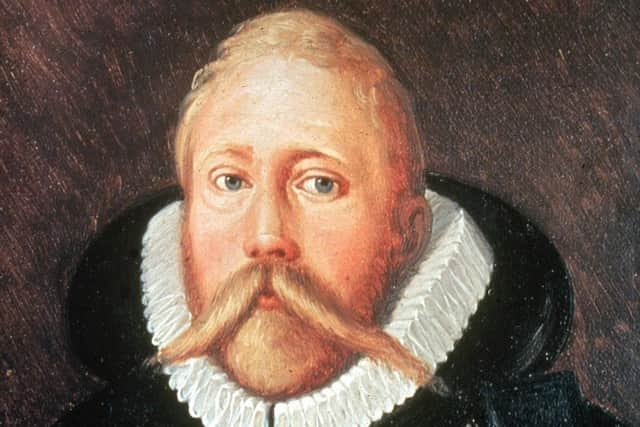

Tycho Brahe (1546-1601) is one of the most colourful characters in the history of science. He was a Danish nobleman who lost part of his nose in a duel while he was a student. Because of this he studied medicine and alchemy, which enabled him to construct a false nose of silver and gold, which he held in place with a special glue that he invented. In 1572 he observed what seemed to be a new star in the constellation Cassiopeia. He wrote about this in a small book he titled de Nova Stella, thereby giving us the word nova for a new star. This was the start of a lifelong interest in astronomy, in which he was assisted by Jepp, his court jester, whom he thought had the gift of second sight and who sat at his feet during meals.
In 1990 excavations were carried out on his underground alchemical laboratory, and pottery and glass shards were unearthed. These have now undergone chemical analysis
to determine which elements the original glass and ceramic containers came into contact with. The results have been published in the journal Heritage Science.
They discovered enriched levels of trace elements of nickel, copper, zinc, tin, antimony, tungsten, gold, mercury, and lead on the pottery shards. These give insight into the substances used in his laboratory over four centuries ago.
Tycho Brahe is known to have tried to develop medicine for various diseases of the time, including plague, syphilis and leprosy. His medicines were said to contain theriac, which could contain up to 60 ingredients, including snake flesh, opium, various metals, oils and herbs
Alchemists and doctors at the time believed that the planets and various metals were associated with different body organs. The sun, the heart and gold were such examples. Interestingly, earlier analysis of Tycho Brahe’s hair and bones found various elements including gold. It seems highly likely that he had tested his medicines on himself.