
‘Built on love’: How Wakefield Council is helping to shape the future of children’s homes

Wakefield Council is helping to lead the way for the future provision of children’s homes services in the UK.
The authority’s children and young people’s service now boasts a number of national ‘firsts’ in helping to provide settled and loving accommodation for some of society’s most vulnerable youngsters.
Last month, three children’s homes in the district were given ‘outstanding’ ratings following Ofsted inspections.
Inspectors also judged four other homes as ‘good’, one of which was said to have ‘outstanding’ leadership and management.
Changes have been driven following a care review, Stable Homes Built on Love, carried out by MP Josh MacAlister.
The paper, published in 2022, called for a “wholesale reform” of the children’s social care system, including a greater focus on early help, keeping families together and the introduction of regional commissioning models for residential and foster care placements.
It also called for new measures to address a lack of placements nationally for children.
Vicky Schofield, the authority’s corporate director for children and young people services, explained: “It’s a real problem in terms of getting good outcomes for children and young people and balancing council budgets.
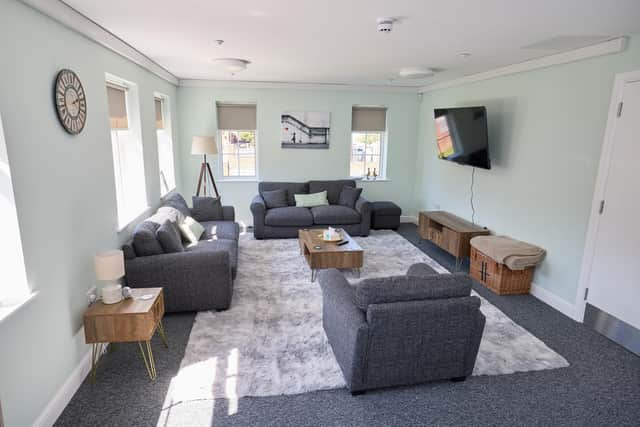
The council’s new approach has included closing its large children’s homes across the district and replacing them with a greater number of smaller facilities.
Ms Schofield said: “We started on this road about five or six years ago and we very deliberately decided that we wanted to redesign all of the homes that we run for children who would likely not find permanence within a family.
“We are really clear now that (larger homes) are not the way to look after young people, particularly when they have suffered trauma or experienced separation and loss.
“They have significantly more emotional needs than other children in the general population.
“What we do now is accommodate young people in two-bed homes consistently across Wakefield.
“The broader model for children’s homes in Wakefield is small, family homes, on usual residential streets, all across the district.
“People out there won’t spot them from other homes where any family lives.
“Staff teams are smaller and we organise accommodation in ways which is as close to a family home as we can get, understanding the regulatory context that we have got to work within.”
In one outstanding-rated home, inspectors found that “children have wonderful experiences” and “are making and sustaining fantastic progress in all areas of their development.”
Inspectors highlighted that children had “trusted, secure and lasting relationships” with staff, and that leadership “creates an environment where children and staff flourish.”
One child told inspectors that “staff have given them a voice.”
The council said the results reaffirm its “commitment to providing safe, nurturing environments where children can thrive.”
Ms Schofield added: “What we are really clear about is that once children come to live with us in that accommodation they don’t move.
“That sounds really simple but that’s quite unusual in the children’s homes sector.
“If there is something not working for them in terms of the way we are caring for them or the environment, we adapt ourselves, rather than expecting the young person to shift and change to us.”
Ms Schofield said the approach had led to the number of young people living in external children’s homes outside of Wakefield district being halved.
“We now have no placement disruptions within our homes since we opened small homes about five years ago.
“Consistently, our children and young people are not going missing. They are in education, where they weren’t previously.
“Their behaviours and emotional presentation is much more stable.
“We are seeing our young people now beginning to leave care and have much better outcomes when they move into early adulthood.
“Our rates of young people leaving care and going into in employment, education and training is significantly higher than the statistical neighbour average.
“We know that what we are doing is making a tangible, qualitative difference for children in terms of their life chances as they move on from us.
She added: “The narrative within the inspection judgements speaks for itself, it sets that out very clearly.
“Young people are telling us they feel safe, they feel loved and they don’t want to move.”
Margaret Isherwood, the council’s cabinet member for children and young people said: “The outcomes for the children have been absolutely amazing.
“They are moving into a community and they are settled in it. They feel part of it.”
Other changes have seen one of the council’s former homes transformed into a new ‘fostering hub home’.
The facility, in the Lupset area of the city, is designed to help address the national shortage of foster carers.
It provides a comprehensive package of support from experienced staff, including respite care to promote longevity of the placement with the foster carer.
Ms Schofield said: “This home is a little bit different but it’s a very similar model.
“We knew that we had to find a purpose for a much bigger building.
“It is probably the first of its kind in the country – and it’s definitely the first for us – which we believe will help us to drive up the opportunity for young people to move up into family placements.
“It provides a couple of functions. The home side, where two young people live consistently – we anticipate for about six to nine months.
“During that time we will carry out bespoke fostering searches for those young people.
“The hub side of the home enables carers and young people to come back for activities, for training, and for therapeutic intervention if that’s something that’s needed.
“We are really clear that over time what will happen is that there will be a community of support that develops around the home so more and more foster carers will take on more young people through this provision.
“Carers will never be without help, either from within their peer group or from the home itself.
“We want to ensure children are really well looked after like they are in our other homes and we also want to find more fostering families for young people.”