
‘Leeds would like to take the credit but Portland cement is from Wakefield’ – Pub sample may prove invention’s origin
A sample taken from a Wakefield pub could prove that a kind of cement used in buildings all around the world originated in Wakefield.
In October 1824 Joseph Aspdin, a bricklayer from Hunslet in Leeds, working in Wakefield’s Lower Kirkgate area was granted a British patent for the invention of Portland cement, the basic component of concrete.
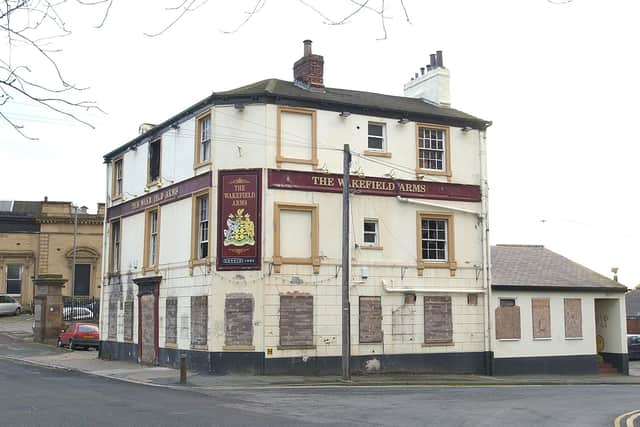
On the bicentennial of the patent, a sample has been examined from the Wakefield Arms pub, near Wakefield Kirkgate railway station, which is understood to be the only remaining original Aspdin concrete
Wakefield Historical Society said Mr Aspdin’s patent might have seemed to have settled the debate, but experts have hugely differed on whether it is like the cement we use today.

But Pam Judkins from the historical society said the origin was clear.
She said: “It is really surprising that it has always been a matter of dispute where and when he achieved this, in spite of his patent dating from 1824, 200 years ago.
"Other places, particularly Leeds, would like to take the credit. It is still of importance to our way of life because without the extra strength provided by Portland cement we could not have the high rise buildings that now dominate our cities all over the world.”
The University of Leeds’ Professor Ian Richardson, an international authority on cement and its uses, will deliver a lecture on Mr Aspdin time in Wakefield and the new evidence that he not just created Portland cement, but created it in Wakefield itself.
The event will take place in the Kingswood Suite at Wakefield Town Hall on October 23 at 7pm.