
Review: Jeep Compass Electric
Julie Marshall drives the redesigned all-electric Jeep Compass
Earlier this year the Jeep Compass underwent a massive redesign.
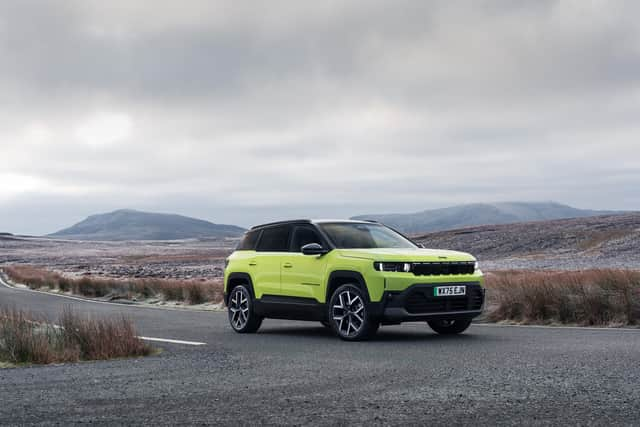

Now built on the STLA Medium platform, shared with the Peugeot 3008 and other Stellantis models, it is longer and wider than before, giving it a more commanding presence on the road.
For the first time, the Compass is available as a full electric, with a claimed range of 289.6 miles between charges. Other powertrains include mild-hybrid and plug-in hybrid versions.
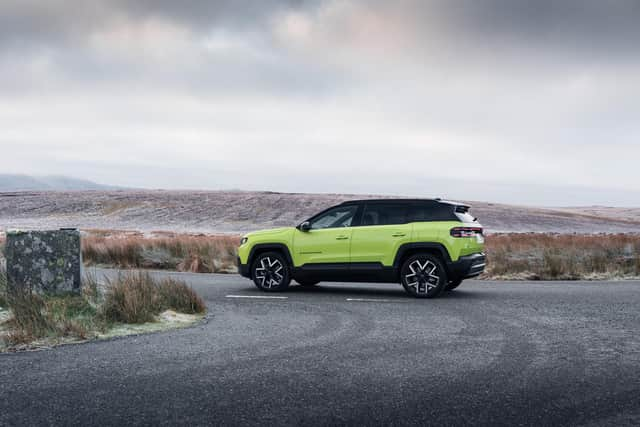
We tested the front-wheel drive electric version, which seems slightly at odds with a brand that has made its name with go-anywhere ruggedness. It shouldn’t really be a surprise, though, as the Compass has been offered in front-wheel only for almost 20 years.
If four-wheel drive is a must, you need to step up to the Compass 4xe dual-motor EV, which also gets a raised ride height and a few extra rugged touches.
My first impressions of the FWD Compass were that the steering was too light and the car felt somewhat disconnected from the road. However, as the week went on, I came to appreciate its superb manoeuvrability and tight turning circle, and the light steering bothered me less.
The automatic transmission is smooth and responsive, with intuitive gear changes.
Despite the radical makeover, the Compass still looks every inch a Jeep. Its square, boxy shape, minimal overhangs and trademark seven-slot grille leave you in no doubt about its heritage.
The front seats are comfortable for both driver and passenger, but rear legroom and headroom are less generous than the exterior dimensions suggest. Three adults across the back are a squeeze.
Boot space has improved from 438 litres in the old model to 550 litres, rising to 1,700 litres with the rear seats folded. Even so, it remains one of the smaller boots in its class, and there is no frunk – the useful storage compartment beneath the bonnet found on some electric cars.
There are, however, plenty of other useful storage spaces dotted around the cabin.
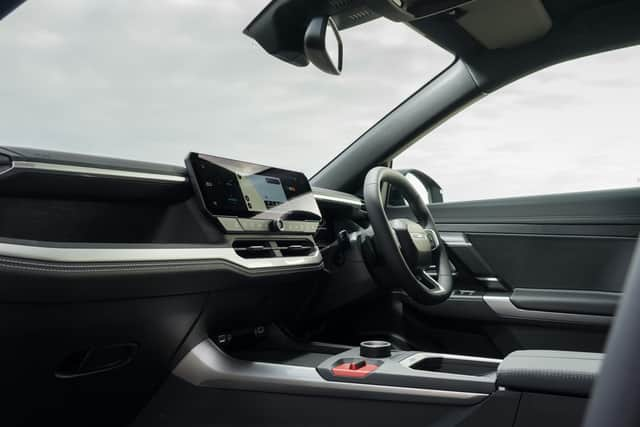
As with most modern cars, digital technology dominates, but the Compass has retained some physical buttons and switches, making life on board less complicated.
The interior is smart, with good-quality materials throughout. A funky red drive-mode selector is a nice styling touch, while the rubber floor mats featuring images of sea creatures add a touch of Jeep character.
The Compass now has a huge 16-inch touchscreen for its infotainment system, up from 10.1 inches in the previous model. It is responsive, easy to navigate and supports both Apple CarPlay and Android Auto. There are also two USB sockets up front and two in the rear.
Safety equipment is comprehensive and top-notch, although some systems can be overly intrusive. The constant beeps and bongs can become annoying, but fortunately most can be switched off easily enough.
Overall, the new Compass is a more accomplished and refined family SUV, despite lacking four-wheel drive.
Jeep Compass
Price: £39,200 (£42,600 as tested)
Engine: 74kWh battery
Power: 216bhp
Torque: 254lbft
Transmission: Automatic
Top speed: 112mph
0-62mph: 8.3 seconds
CO 2 emissions:0g/km