
Column: Dr's Casebook" Dr Keith Souter: Did the Blood Moon affect your sleep?
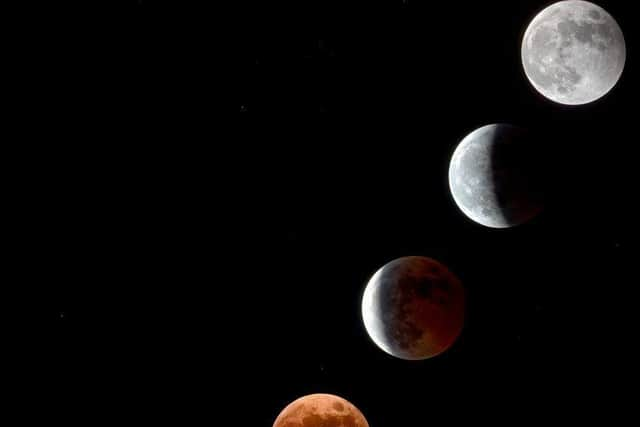
The Blood Moon on Sunday September 7 was quite spectacular if you were cloud-free. Seeing the full moon turn a coppery red is caused by a lunar eclipse, the first since 2022. But how was your sleep round about then?
It is fascinating to follow the moon it through its phases. Essentially, it orbits the Earth on a 29.53 day lunar cycle. Over that time it waxes and wanes and even become invisible to us for a short period. During the Blood Moon the Earth passed between the sun and the moon blocking the light to the moon and casting its shadow on it. The red appearance is because of refraction, where blue light is scattered and the red light reaches the moon.
Anecdotally, a lot of people say they don’t sleep well around the full moon. I came across a piece of quirky research that suggests that the phases of the moon may actually have an effect on one’s sleep cycle, and that the full moon may be a time when people may find it especially hard to sleep.
Everyone knows that under normal circumstances we are programmed to sleep during the hours of darkness and to wake and be active during the hours of daylight. It seems that our hormones are regulated in part by the sun, which produces the body rhythms that we call ‘circadian rhythms.’ When we go outside those times, with nightshifts and when we travel and get jet lag, it can take time for our rhythms to adjust and for normal sleep patterns to return.

This study was done in Switzerland, where researchers were questioning whether the full moon as well as the sun can actually affect sleep cycles. They had accumulated a lot of data from a sleep laboratory on 33 healthy who had slept in the lab for 64 nights. They were able to compare sleep with the phases of the moon.
Amazingly, they found that four days before and four days after a full moon, the participants experienced significant decreases in sleep quality. They on average had 20 minutes less sleep on those nights. Not only that, but their deep sleep was reduced by a third. Also, their levels of melatonin, the hormone that makes one feel drowsy after dark dropped significantly.
They suggested that this could be real phenomenon that is a remnant of a biological defence, from the days when it might have been dangerous for people to sleep outdoors in moonlight, when predators could see them. Interesting!