
Column: Dr's Casebook" Dr KeithSouter: smile more often to reduce stress
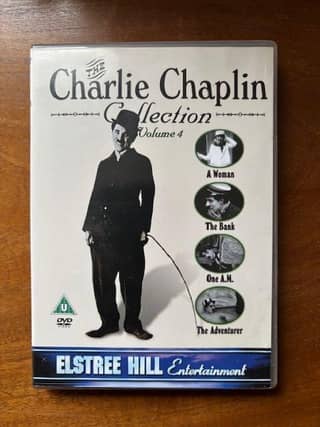

I am a fan of the silent movie era. I have quite a collection of books, videos and DVDs about the stars of the Silver Screen. I always love the Charlie Chaplin movies, because they make me smile. And smiling is good for you.
I recently re-watched Charlie Chaplin’s 1936 silent movie Modern Times and was struck by the soundtrack, which I noted that Chaplin had composed. Lyrics were added to the music in 1954 by John Turner and Geoffrey Parsons, two English lyricists, who gave the song the title ‘Smile.’ It was subsequently recorded by Nat King Cole and then by Michael Jackson.
At the very end of the movie, Chaplin points to the corners of Paulette Goddard, his leading lady’s mouth, indicating that she should smile. She does and they happily walk down the road into the sunset. I’m sure you’d recognize the song: ‘Smile though your heart is aching, smile even though its breaking…’
It is a classic song which set me off researching. I found a study in which one hundred and seventy students were subjected to anxiety-inducing tasks in order to see whether smiling helped them reduce their anxiety. They were asked to perform stressful tasks, such as tracing a star using their non-dominant hand while looking at a reflection in a mirror. Another task involved plunging a hand into icy water, wch is a classic way of inducing physical stress. These are both tasks that produce measurable anxiety.They used heart rates and self-reported stress levels to assess how stressed the individuals were doing the various tasks.

The students had to perform the tasks under three conditions. Firstly, without smiling. Secondly, while actively smiling. Lastly, while holding chopsticks in their mouth in a manner that forced the semblance of a smile. This enabled the researchers to see whether there was a difference between a genuine smile in which all of the facial muscles were used, and a false smile which simply used the muscles round the mouth.
They found that when tasks were done with a smile, both a natural smile and a false smile, the students had markedly less stress levels. There was, however, a significant difference between the natural smile and the fixed, false smile from holding chopsticks.
The researchers concluded that actively making oneself smile has a very real effect on reducing how stressed you feel. It certainly seems to bear out the wisdom of the song. It finishes ‘…smile, what’s the use of crying? You’ll find that life is still worthwhile, if you just smile.’