
Column: Dr's Casebook: Why tea may be better than coffee at protecting bones
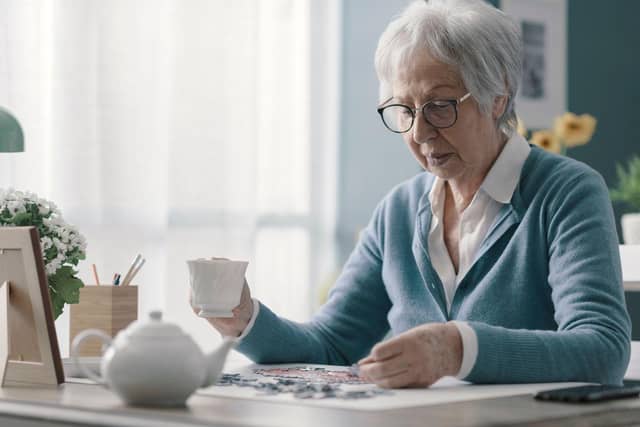

Both tea and coffee seem to have individual health benefits. Yet as with most things we take into our bodies, moderation of intake seems to be a good principle.
A recent decade-long study suggests that for older women bone health may be improved by tea drinking. Moderate coffee intake causes no harm, but excessive amounts, that is five or more cups a day, in women who drink more alcohol is associated with less bone density.
In the UK there are about seventy thousand broken hips every year. Hip fractures are the commonest reason for admission to an orthopaedic ward. Usually, these are so-called ‘fragility fractures,’ caused by a fall affecting an older person, with osteoporosis or osteopaenia. Women are more prone to sustain a broken hip than men, and they are most common in the seventies.
In assessing risk, we use bone mineral density, or BMD. This is a good marker of how strong the bones are, and it is a good indicator of risk of having a fracture.
This research from Australia recently published in the journal Nutrients monitored about ten thousand women aged 65 years and older over a ten year period. They compared repeated measurements of tea and coffee consumption together with BMD of hip and femoral neck.
They found that women who drank tea had a slightly higher total hip BMD than those who did not. There was a statistically significant difference, so it looks as if tea drinking has a slight bone-strengthening effect.
Looking at coffee drinking was less clear. It seemed that two to three cups a day was not associated with harm. However, consuming more than five cups per day was linked to a lower BMD. This as especially so in those women who had higher intakes of alcohol. It suggests that high levels of coffee drinking is associated with weaker bones more at risk of hip fractures.
Why these findings come about is not clear, but the researchers suggest that it is because tea is rich in catechins, which are known to encourage bone formation and which also slow bone loss.
Coffee has a higher caffeine content than tea and this may be significant. Research suggests that it can interfere with calcium absorption from the diet. Having milk in the coffee may offset this effect. That is worth considering when choosing to have your coffee black or white.
But at the current time it may be as well to restrict the number of cups of coffee a day to five or less.