
Dr's Casebook column with Dr Keith Souter: A taste of folk medicine on the Kyle of Tongue
I have just come back from driving the NC500, the coastal road around the north or Scotland. The ever-changing scenery was fantastic, with the mountains, glens, ancient castles and forests. You get a sense of history as you travel, from the uprising of the clans in support of Bonnie Prince Charlie in 1745 and the carnage of the battle of Culloden a year later.
Then the highland clearances that followed over the next century when farmers and communities were evicted to make way for sheep and profit.

Life in those distant days must have been incredibly harsh. This was brought home when we drove around the remote Strathnavar villages.
I have always been interested in folk medicine because in times when there were no doctors people had to rely on local wise women and healers.
I was amazed to learn that in 1397 a local college was established at Melness on the Kyle of Tongue, where students were taught how to treat people with specific plants, seaweeds and lichens.
According to legend, a man called Fearchar became one of the first Gaelic healers, and a royal charter of 1397 shows that King Robert II granted land in Melness to ‘Fiercado medico nostro,’ which means Fearchar our physician.
Clootie wells and clootie Trees
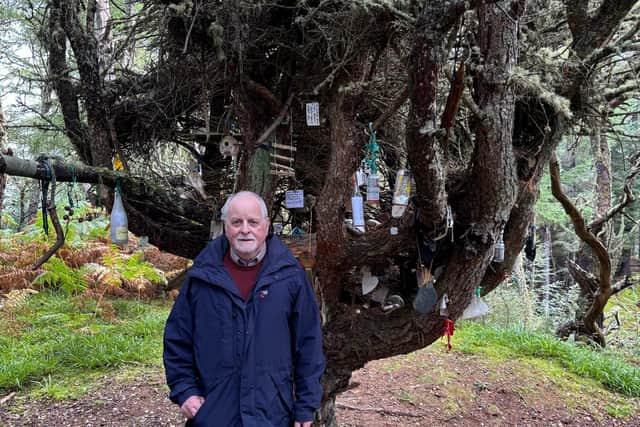
Magic inevitably played a part in healing practices centuries ago. Yet interestingly, remnants of this can still be seen in woods in the highlands. You can come across clootie wells and clootie trees. A clootie in Scots is a cloth or piece of material. When someone visits such a well they soak a cloth or piece of clothing in the well then wash or dab the part of their body that is ailing. Then they tie the clootie to the well or lay it under a nearby stone. Or, if it is a clootie tree, they hang it there.
This is an example of transference magic, the idea that you transfer the ailment to the cloth and the magic will cure you.
I came across a clootie tree in a wood above Lochinver. People hang things from it to this day, some in the hope of getting some ease, others just for luck.
Similar transference magic has been used in folk medicine to get rid of warts by rubbing a snail or a slug on the lesion and then letting the creature take it away. It is not to be recommended!
MacBeths and Beatons
Between the early 1300s and early 1700s, the MacBeths practised medicine all over Scotland. Members of the family inherited this right and passed on medical knowledge through the generations. In the 1500s they became known as the Beatons. As physicians to the Scottish kings they were sometimes rewarded with lands.
Rain and hollowed stones
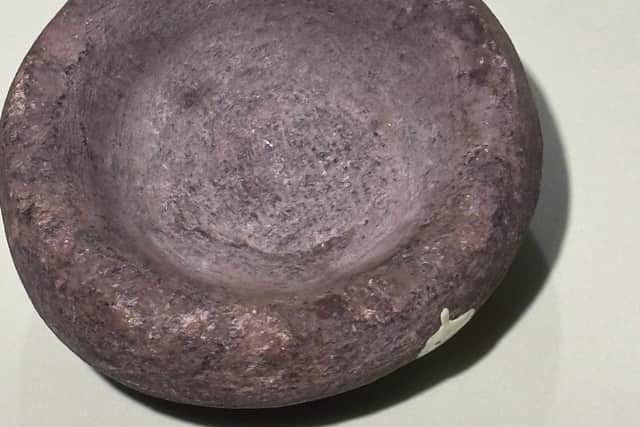
Water taken from the clefts or hollows in rock was said to make remedies more effective, especially in treating whooping cough, or removing warts and lesions. Traditional healers used hollowed out rocks to collect the rain and mix their remedies in them.