
Dr's Casebook column with Dr Keith Souter: Tennis and medicine at King Henry VIII's Court
What an amazing start to the summer with lots of excitement as Wimbledon begins. Novak Djokovic is striving to add to his tally of grand slams and living legend Serena Williams is again going to grace the courts.
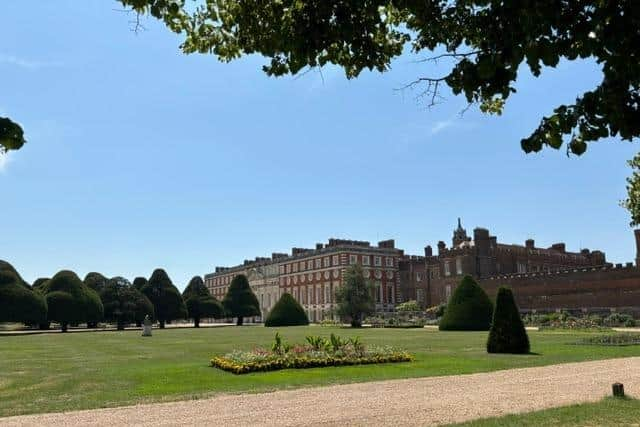
I have just returned from Hampton Palace after doing some historical research. I was there to see King Henry VIII’s apartments and also the Royal Tennis Court which was built for him and on which he played.

Royal tennis, called Real Tennis since Victorian times to distinguish it from lawn tennis, was the precursor of the modern game. It is played indoors in an enclosed court that resembles a medieval street. Sloping roofs line three angled walls with netted windows and openings that players can target to win points or force the opponent to play specific returns.
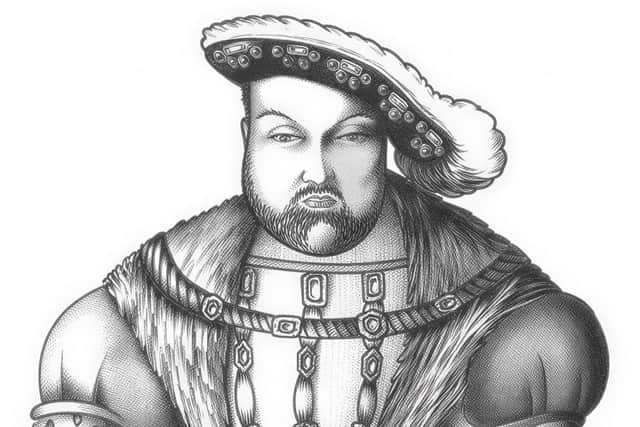
The king was an avid played in his youth and it is no surprise that it is said that the nobles and diplomats who played him had to contrive not to win, lest they face his terrifying temper. Allegedly, Queen Anne Boleyn was watching a match when she was arrested and accused of treason. Seventeen days later, King Henry was purportedly playing a game on the court at the moment of her execution.
Regulation of medicine and surgery:
Medicine in Tudor England was a hotch-potch of medical practice, and it was King Henry VIII who first tried to regulate the professions. In 1518 he conferred a royal charter to found the College of Physicians in London. The College of Physicians was permitted to give licences to physicians to practice. It became the Royal College of Physicians after the English Civil War in the 17th century.
In 1540 he gave another royal charter to form the Company of Barber-Surgeons, which would eventually become the Royal College of Surgeons in 1800. Its function was to licence surgeons.
By granting these two charters King Henry VIII had effectively given the physicians and the surgeons the social status and recognition that they had sought. The physicians thought themselves to be socially superior to the surgeons, who in turn thought themselves to be superior to the apothecaries and other people who plied a trade.
An effect of these charters, however, was that it was seen to give the physicians and the surgeons a monopoly on the preparation of medicines. Poor people could not afford the expensive preparations containing precious metals and minerals that the physicians and surgeons prescribed. Interestingly, Henry had some sympathy for them, for he himself was experienced in compounding ointments and making plasters.
In 1542 he granted The Herbalist’s Charter, which allowed herbalists or anyone with knowledge to do so, the right to prepare herbal remedies. Since this effectively gave anyone the right to practice medicine without any interference from the physicians or surgeons, it was derided by the medical profession as being the Quack’s Charter.
Undoubtedly, Henry’s interest in herbal preparations derived from self-interest. He suffered from leg ulceration for many years and clearly tried to treat them himself. Indeed, he is known to have collaborated with several doctors and wrote a book on the subject, containing 130 prescriptions. Many of them actually acknowledge that they were ‘devised by the King’s Majesty’.