
'A deeply moving piece, with such important stories to tell': UK Aids Memorial Quilt to go on display in Wakefield
The UK Aids Memorial Quilt collection is to be displayed in Wakefield later this year.
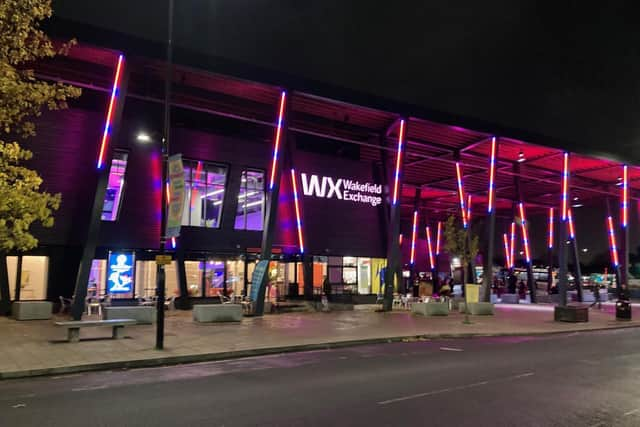
A combination of 42 quilts and 23 individual panels, which represents about 385 people who lost their lives to HIV/Aids in the UK, will be shown at Wakefield Exchange (WX) during the summer.
Wakefield Council said the city would be the first outside London to display the patchwork in its entirety.
Hannah Appleyard, the council’s cabinet member for culture, leisure and sport, said: “We’re pleased to bring the UK AIDS Memorial Quilt to Wakefield.
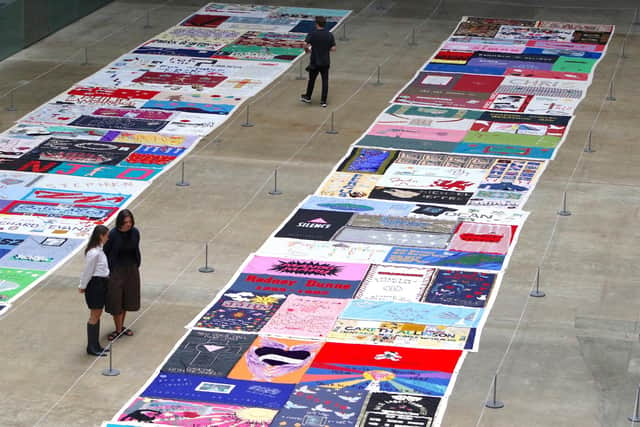

“Commemorating the lives of nearly 400 people, each panel has been lovingly created by the family, friends or partners of someone who has lost their life.
“It really is a deeply moving piece, with such important stories to tell and we’re proud to host this.”
All 42 blocks will be displayed at WX, with selected individual panels being displayed at other venues across the district.
The event will be free to visit from June 3 to 7 and will include scheduled readings of the names of those commemorated in the quilt.
A documentary film, titled There Is A Light That Never Goes Out, about the quilt being displayed in London’s Hyde Park in 1994 will also be shown.
Talks and workshops will also be free to attend over the course of the exhibition.
The quilt forms part of the world’s largest community art project, started in the USA in 1985 by activist Cleve Jones, commemorating friends, family and loved ones lost to AIDS.
Individual panels were stitched together to create larger quilts.
They were then shown outdoors as a form of protest to raise awareness about HIV and AIDS.
Seven UK HIV support charities formed the UK AIDS Memorial Quilt Partnership in 2014 to conserve and display the quilt.
Alex Sparrowhawk, a director at George House Trust, which provides support to people living with HIV, said: “The UK AIDS Quilt Partnership is delighted that the quilt is coming to Yorkshire in 2026.
“In the late 1980s into the 1990s, HIV activism across the north of England was driven by networks of volunteers and campaigners linking cities like Wakefield, Leeds and Manchester.
“Together, these intertwined movements helped to transform services, challenge fearmongering and build a proud tradition of HIV activism across the north of England.”