
Artwork celebrating novelist George Gissing to stay in city centre
An art installation celebrating Victorian novelist George Gissing is set to stay on display in Wakefield city centre.
The design, by artist Ekaterina Sheath, was temporarily put in place close to the writer’s childhood home on Thompson’s Yard in 2022.
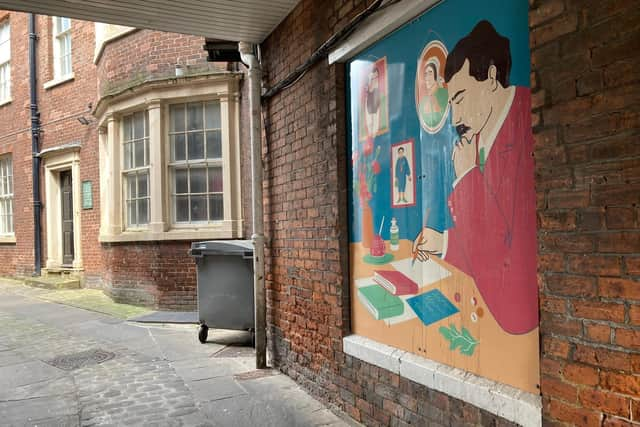

Gissing published 23 novels between 1880 and 1902 and was considered one England’s greatest novelists in the late 19th Century.
The work is among a number of pieces commissioned as part of the Westgate heritage action zone project, which aims to breathe new life into the city’s historic streets and tell forgotten stories.

Wakefield Council has granted planning permission it to stay for a further three years.
The proposal was back by Wakefield Civic Society who said it was “much admired” by people taking part in guided walks around the city centre.
A letter of support from the society said: “They are an eye-catching and attractive way to show something of the area’s social history and we fully endorse their retention for the extended period.”
The design is in a conservation area on the side of a listed building in a passageway between Westgate and Thompson’s Yard.
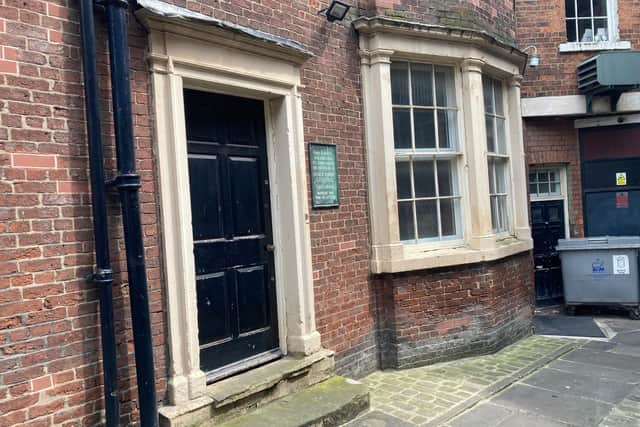
It is metres away from Gissing’s birthplace, which has a small museum housed in two rooms inside the building dedicated to his life and work.
The museum is maintained by the Gissing Trust.
Approving the application, a council planning officer’s report says: “The artwork to be retained forms part of a wider cultural event in the district for a further period of three years.
“This proposal will allow the public to freely access and appreciate a piece of art which would not typically be found in the city centre.
“Given the cultural benefit resulting, the proposed placing of the artwork on this temporary basis is acceptable.”
Born in Wakefield in 1857, Gissing was the son of a pharmacist who went on to win a scholarship to Owens College, now Manchester University.
Gissing was sentenced to one month’s hard labour at Belle Vue Prison in Manchester and was expelled from college after he was caught stealing from other students.
He was sent to America, where he sold short stories to newspapers, but returned to England, determined to find success in London.
His first novel, Workers in the Dawn, was published in 1880.