
D-Day 80th anniversary: Call for the Wakefield women who built landing craft vessels to be honoured with a blue plaque in recognition of their vital contribution to the war effort
D-Day may be inextricably linked with the beaches of Normandy, but Wakefield can claim a place in the story too.
It was in a factory in the city, in 1943, that 72 landing craft assault vessels were manufactured in 72 days.
This extraordinary effort was undertaken by 800 women and girls, most aged between 15 and 30, and the vast majority of whom had never worked before.
Those who came from other employment were, primarily, shop assistants or shorthand typists. Some had been receptionists.
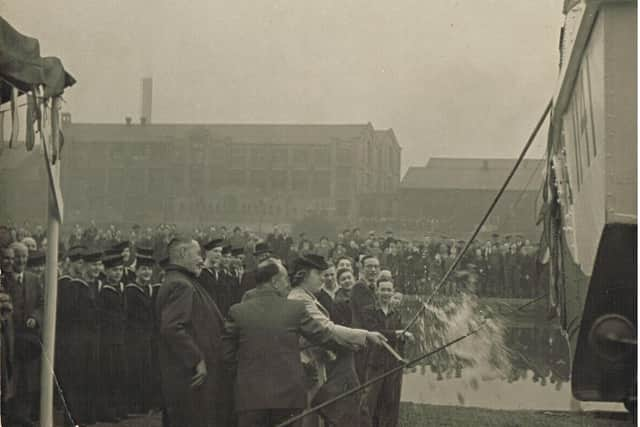

But the boats they produced were used on D-Day to transport soldiers from large troop ships to the beaches.
"The factory was off Thornhill Street, and most of it is now under the Anchor housing development," says Paul Dawson, author, Wakefield Historical Society member and great grandson of the factory co-owner, Charles Henry Drake.
"Bits are underneath the Pinnacle, the Sainsbury's garage and some sheltered housing flats.
"The boats were a vital contribution, and Drake and Waters made a huge contribution locally to the war effort.
"The factory was working very much 24 hours a day, nearly seven days a week.
"My great-grandfather was a force of nature. He understood the Second World War was a war of production and would not be fought in battles but between factories, and the way to win the war was to make more stuff than the Germans.
"German engineering was the best in the world but it was precision engineering made by a very skilled workforce.
"What my great-grandfather understood was, if it could be simplified and made by largely non-skilled workers, you could produce two or three items compared to one by a skilled labourer, and by having that extra production, you would always have spare Spitfires, spare Lancasters, spare Hurricanes.
"They needed the landing craft as quickly as possible once the initial plans showed the invasion had been formulated.
"So my great grandfather brought in 800 women, most of whom had never had a job before, most of them were housewives, and they were taught to rivet, to be blacksmiths, to bend the sheet armour.
"A whole swathe were taught to be mechanical engineers, to convert lorry engines to be used at sea.
"And then once you've got this workforce that he'd trained up, they were then used to go out and build more of everything to support the war effort.
"When it came to 1945 and the peace, around a quarter of a million pre-fabricated houses were ordered by the government to solve immediate housing needs, and Drake and Waters built 159,000 of these using these skilled labourers."
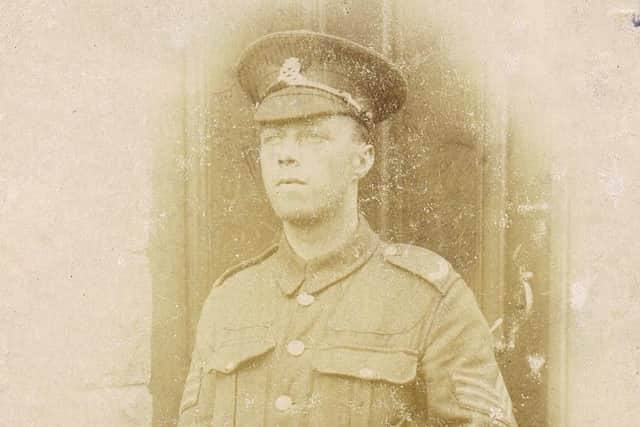
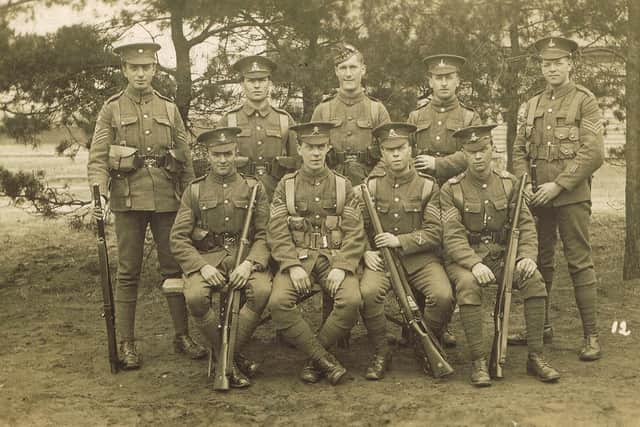
Charles Drake had been a territorial solder before the First World War and served in the Bradford Artillery Volunteers.
"He was called up in 1914 when volunteers were mobilised and went to France with the Staffordshire Regiment," said Paul, whose grandmother Jeane Cresswell became a key figure in the testing process for landing craft.
"He went over the top in November 1914 and got a bullet in the head and was demobbed and came back to England."
He then became a Sergeant Major musketry instructor, training all the new recruits who went over to fight how to fire their rifles.
"Because he was so good at that, he was never allowed to serve back overseas at the front, and that really cut him up and made him want to do what he could in the Second World War," Paul said.
"He began asking for government contracts in the late 1930s to start rearmourment.
"He pushed and pushed to build the Hammond mosquito, which were made out of plywood, and Drake and Waters, being maufacturing joiners, he thought he could build those in Wakefield.
"He didn't get that, he got the chance to build the landing craft, which is as significant in many ways."
Charles was from Hartshead, near Cleckheaton, and came to Wakefield in the early 1920s, meeting a demobbed RAF mechanic flight engineer, Robert Waters, at night school.
Both were working at a manufacturing joiners in Wakefield and set up the factory in 1924.
"They bought a second hand railway carriage, which was in Playhouse Yard behind the Theatre Royal," Paul said.
"By 1930, they bought out Hall and Armitage on Thornhill Street and by 1933 had build a new factory on Kings Road and had 300 staff by the time of the Second World War.
"(His attitude was) 'What can I do to make sure we win and that the lads that are on the front are as protected as possible?
"He'd been there, he'd seen what the Great War was going to become.
"He must have been an exceptionally brave man, when the Captain blew the whistle to climb up that ladder, to walk forward into machine gun fire. That takes courage."
Paul feels the story is a largely forgotten part of Wakefield's past.
"Due to the vaguaries of history, we only know the names of two or three of the women who actually worked building the landing craft,” he said.
"We know Peggy Taylor, who was a hairdresser, and there's a few other names we have, but it requires an awful lot of research to find out who these women were.
"It's almost totally forgotten. Drake and Waters went catastrophically bankrupt in the late 1970s.
"It's almost out of living memory and I doubt any of the women who worked in the works are alive to pass on these stories.
"But the contribution of Wakefield women to the war effort is far more important than has been previously considered.
"It's been discovered, for instance, that a Wakefield woman was a decoder at Bletchley Park, so there's all these stories that need to come to the fore.
"Given it is now 80 years on, it would be fantastic if the women who built these vessels could be honoured with a blue plaque or other form of commemoration."