
Dog owners warned against deadly mistake this week as temperatures rise
We all know that walking our dogs in extreme heat is a big no, but many dog owners assume that milder days are harmless.
In reality, dogs can and do suffer from heatstroke even on days that feel comfortable to us - and it can often be fatal.
Over a quarter of dogs treated for heatstroke in the UK didn’t survive, according to emergency care data published in Veterinary Record.
The 2022 study found that many dogs died even outside official heatwaves, often after collapsing on routine walks.

Simon Crawshaw at Hilltop Pet Food, said: “Even at 22 or 23 degrees, if the sun’s been beating down all day, pavements can reach temperatures that will burn your dog’s paws in seconds.
"Dogs won’t tell you when they’re struggling, they’ll just keep walking, because that’s what you’re asking them to do. But once they overheat, things can go downhill very quickly.”
And unfortunately, most dog owners don’t spot the signs until it’s too late.
How to know when it’s too hot to walk your dog:
Use the seven-second rule: Press the back of your hand against the pavement for seven seconds. If it’s too hot for you, it’s too hot for them.
Watch the temperature, not just the weather: Even if the air temperature feels moderate, ground surfaces (especially dark tarmac) can be dangerously hot by mid-afternoon. Anything above 24 degrees should be avoided.
Time it right: The safest times to walk in summer are early morning or after sunset. Avoid the 11am to 4pm window entirely.
Why playing in the garden isn't always safer
It’s not just walks that pose a risk. Simon warns that garden play can be just as dangerous, especially if dogs are chasing balls or running laps in the sun.
“Dogs can drop from heat exhaustion in their own gardens. People think they’re being responsible by skipping the walk, but then throw a ball for 20 minutes on a hot lawn. It’s a recipe for disaster.
"Dogs won’t stop playing until they physically can’t carry on.”
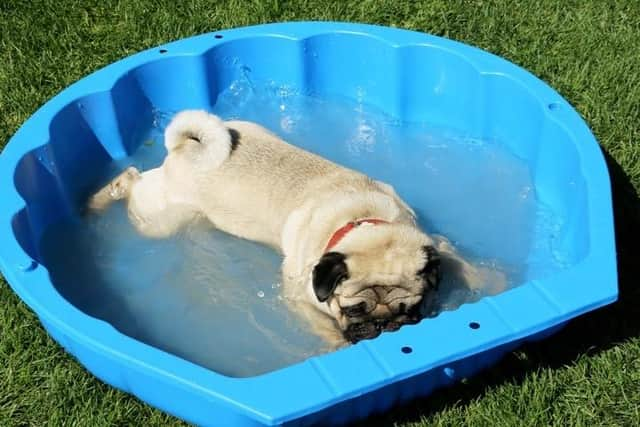
Instead, he suggests offering shade, paddling pools, or frozen enrichment toys stuffed with your dog’s usual food to keep them stimulated without raising their core temperature.
“You don’t need anything fancy. Just use part of their normal meal, ideally a grain-free food with high meat content inside a Kong or slow-feeder, or if using raw or wet food, freeze it, and let them lick it gradually.
"It cools them down and keeps them occupied.”
Key signs of overheating include:
Excessive panting
Drooling or glazed eyes
Rapid heartbeat
Vomiting or diarrhoea
Uncoordinated movements or collapse
If you notice any of these, stop all activity immediately, move them to a cool spot, and contact a vet. Cooling with lukewarm water (especially over the chest and belly) can help, but avoid ice baths, as they may shock the system.
If you’re in doubt, don’t walk. It’s that simple. Dogs won’t ever say no to a walk, but they will definitely suffer if it's not the right temperature. While warm weather is one of the joys of summer, it’s a time for care, awareness and putting your dog's needs first.