
Firms to be charged up to £2,500 a day roadworks fee on district's main roads
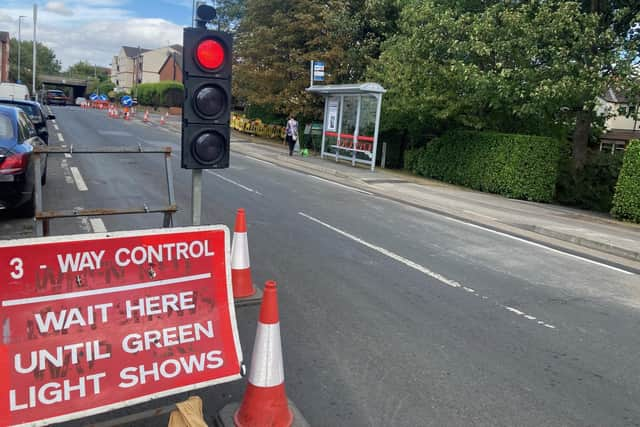
Companies will be charged up to £2,500 a day for carrying out work on the busiest roads across the Wakefield Council district under a new scheme aimed at cutting traffic congestion.
The so-called lane rental scheme allows the local authority to use powers to charge firms, including utilities, if they operate on key routes during the busiest times of day.
Keith Anderson, Wakefield Council’s cabinet member for highways, transport and planning, said: “We know that road works across the district cause delays and disruption to drivers.
“By having the power to charge for these works, we expect to minimise that disruption.

“A more reliable and free-flowing road network supports our economy, connects people and businesses, and makes Wakefield a better place to live and work.”
The scheme, to be introduced later this year, aims to reduce the impact of work on the highway and encourages organisations to schedule works outside peak periods, as well as working more efficiently to minimise disruption.
Wakefield, Leeds and Kirklees councils have worked together to secure Department for Transport (DfT) approval for their schemes, which they plan to launch at the same time.
A Wakefield Council spokesperson said: “The consistent approach will also help iron out any issues when planning cross-border work.
“Alongside reducing disruption and delays during peak times, the schemes should help improve local air quality and improve the reliability of public transport by protecting key bus routes.”
Wakefield Council is responsible for maintaining 1,454 km of roads, 1,944 km of footways, and 150 km of cycle lanes and tracks.
Details of the scheme were first revealed in August last year as the council’s regeneration, environment and economic growth scrutiny committee discussed the prioritisation of highway works in the district.
At the time, Martin Barnes, the council’s service manager for highways and transportation, said the charges were expected to apply on around 10% of the district’s roads.
The officer said councils were unable to stop utility companies that provide essential public services, such as water, electricity, gas, and telecommunications, from carrying out work that could lead to temporary road closures.
He said: “We can manage the work. We can advise. They will need to be permitted and that comes at a cost to the utility.
“But in essence it is not for us to tell a utility how to do their work. It is for us to manage the work that is on the network.”
Mr Barnes said lane rental was “almost to try and force utilities to be a little bit more efficient” and that similar schemes introduced by authorities in the south of England had proved successful.
He added: “It does have a benefit.
“If you are looking at the moment at £100 (per day) a permit, they can be extended without a great deal of consequence.
“When you are looking at £2,500 a day for a primary network, it is going to have an impact.”
Councillors were also told a “Wakefield board” would have to be created under DfE rules to decide how any extra income would be spent but it was expected that 50% would be used on road maintenance.