
Listed Wakefield building linked to celebrated singer Phyllis Lett to become private house
A listed building with links to celebrated singer from the early 20th Century is to be converted into a house.
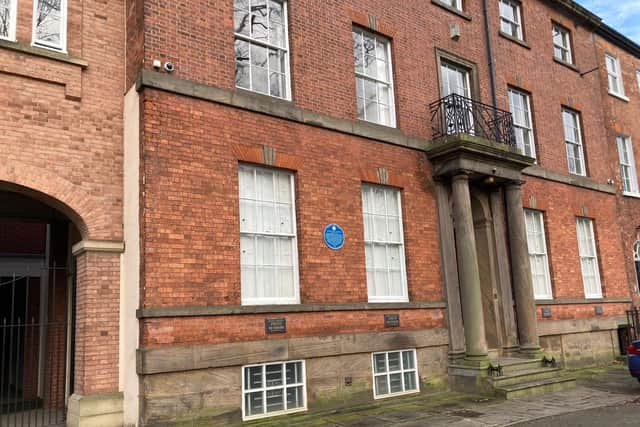
Plans have been approved to convert the property on South Parade, near to Wakefield city centre, from offices back into a residential property.
Built in the early 1800s, South Parade was the city’s first Georgian Terrace and is within a conservation area.
Work will include redecorating the building and installing kitchens and bathrooms.

Permission has also been granted to install solar panels and an electric vehicle charging point.
A heritage statement submitted to Wakefield Council says the plan would ‘contribute positively’ to the conservation area.
A planning officer’s report welcomed the returned of the property to its original use as a dwelling.
The officer said: “The planning authority is satisfied that there will not be a significant impact on the integrity of the heritage asset subject to conditions.”
The building became offices in 1987.
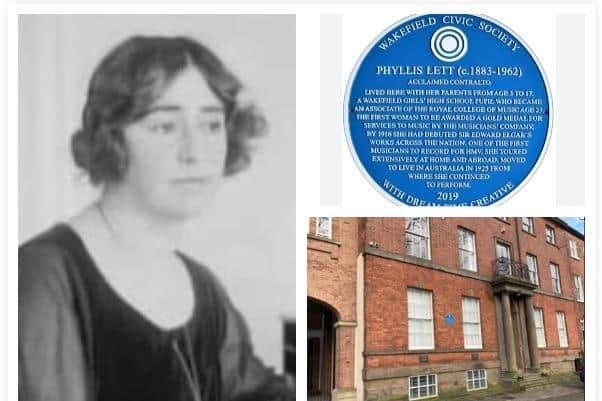
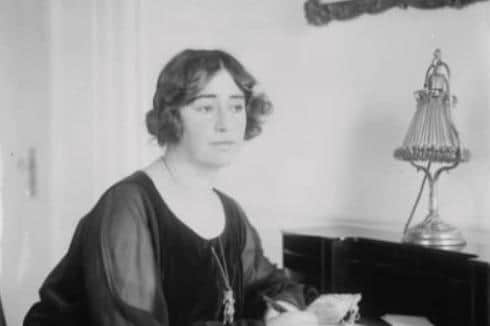
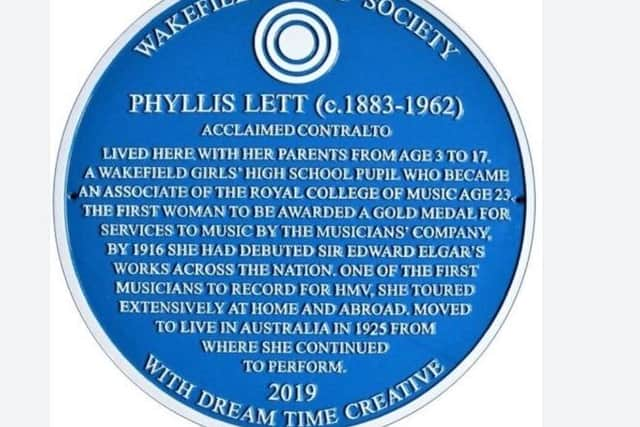
A Wakefield Civic Society blue plaque on the property marks its links with Phyllis Lett, who was born in 1883.
She was a nationally-acclaimed contralto who grew up in the city and lived at the house from the age of three to 17.
Her father was a surgeon at Wakefield’s Clayton Hospital and ran a GP practice from the family home.
Such was her talent that 20th Century composers, including Sir Edward Elgar, would write their music with her voice in mind.
In 1903, she made her debut at The Royal Albert Hall and within three years was a contralto soloist at music festivals across Britain.
In 1916 she became the first woman to be recognised with a gold medal by the distinguished Musicians’ Company.
She is one of only three females to have ever received the society’s gold award and was one of the first musicians to record for HMV.
She regularly featured in gramophone concerts broadcast live on the BBC nationwide, as well as frequently performing at The Proms.
Her professional career saw her tour across the UK and abroad, sometimes accompanied by her sister Hilda, a violinist, and with choral societies and orchestras.
She returned to Wakefield several times, including for the unveiling of the Queen Victoria statue in the city’s Bull Ring in 1905 and for a Corn Exchange concert in 1914 to raise funds for the First World War effort.
She moved to Australia in 1925 after marrying long time friend Charles Rupert de Burgh Kerr and died in 1962.