
'Significant' insurance premiums rise for council buildings
A council has said it is facing a “significant” increase in premiums to insure some of its buildings.
Earlier this year it was revealed that Wakefield Council had been exposed to a £370m financial risk due to some of its properties being uninsured for almost three years.
A report published in January said the authority faced “significant reputational risk” unless “sufficient and appropriate insurance cover” was established.
The council is expected to start a new insurance contract with a provider next month.
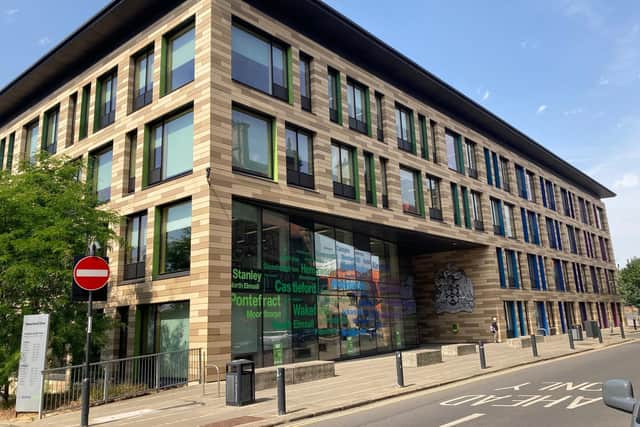

According to the council’s latest financial health report, to be considered by cabinet members next week, the cost of insurance premiums are currently £100,000 higher than expected.
The document says: “Following the renewal of annual insurance premiums the council is faced with significant increased premiums and/or restricted cover for certain buildings.
“The additional premiums have resulted in an adverse forecast of £0.1m.
“It should be noted that the council is in the process of re-procuring insurance arrangements ready for April 2025 for property, motor vehicle and employer liability.”
The report said the council’s overall insurance fund is also “experiencing cost pressures” due to settling “some significant claims.”.
It said: “The provision for unresolved claims remains high with a number of significant value claims yet to reach a conclusion.
“Cost pressures and provisions are creating a £0.4m forecast overspend.”
The paper said £500,000 of reserves set aside for insurance premiums and claims was “being fully utilised.”
The number and identity of council buildings that were uninsured, or under-insured, has not yet been publicly revealed, but some were described as “heritage buildings”.
During an audit committee meeting in January, the council’s chief legal officer stressed that the lack of insurance cover related only to the rebuild value of properties, not to council staff working within them.
An interim report by external auditors said senior management had first been made aware of the issue in October 2022.
It said: “Council officers alerted senior management, including the chief finance officer, of underinsurance and lack of insurance coverage for several buildings, with a book value of £18m and a potential rebuild value (the value used for insurance purposes) of up to £217.6m, which poses a potentially significant financial risk and reputational risk.”
Auditors subsequently concluded the list of buildings without insurance provided two years later, in November 2024, suggested the number and value of buildings without insurance had increased since the problem was first raised.
Their report estimated a total exposure of up to £370m based on rebuild value.
According to the report, the council’s insurer had withdrawn insurance because there had been a lack of progress by the council in clearing “risk improvement actions” following site surveys.
In January 2022, the insurer had notified the council of its intention to reduce insurance cover on four properties and to withdraw insurance on five unoccupied properties from 1 April that year.
Caroline Carter, the council’s chief finance officer, told the meeting: “We have had insurance in the vast majority of our properties. There is a small number that we don’t have insurance in.”
When questioned about the issue at a full council meeting days later, Les Shaw, the council’s cabinet member for resources and property, said: “Unfortunately, I can’t comment on individual buildings because there is a commercially sensitive procurement process for all buildings taking place at this particular time.
“What I would say is that it is extremely important that we have got sufficient and appropriate insurance cover for the council estate.”
Coun Shaw said the council had 1,700 “highly diverse assets” across its estate.
He added: “Insurance is a complicated marketplace at this particular time.
“We are working closely with our current insurers.
“I can assure everybody that that is what we are doing to make sure our cover is as comprehensive as it can be, and to put robust new arrangements in place for when our current contract ends.”