
Solar farm would create “regimented and industrial” landscape at beauty spot, inquiry told
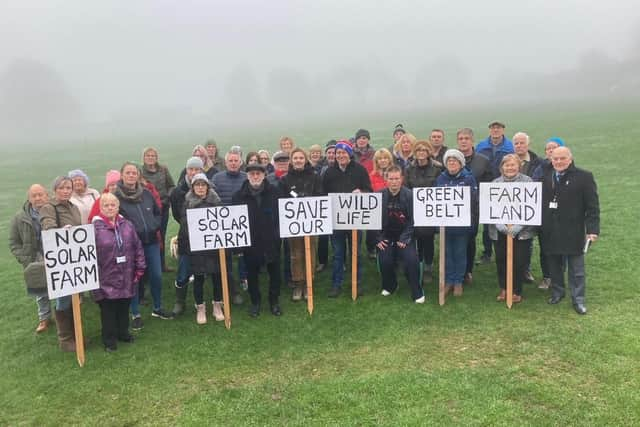
A picturesque area of Wakefield would become “regimented and industrial” if plans to install a major solar farm were approved, a public inquiry was told.
A hearing is being held to determine whether to allow proposals to install solar panels across 133 acres of farmland in Sitlington, which makes up the villages of Middlestown, Overton and Netherton.
Wakefield Council rejected the project put forward by renewable energy firm Boom Power in April last year, describing the scheme as “harmful” to the rural setting.
A seven-day inquiry is underway at Wakefield Town Hall after the company appealed the decision, claiming the development would contribute to local and national net zero targets.

Philip Robson, the council’s barrister, said: “It’s accepted that the drive to net zero requires the planning system to consent to more renewable energy developments, including solar farms, at a scale proposed in this appeal.
“However, that drive does not override the requirements of the (local) development plan or national policy.
“All must still be applied and there must certainly be cases where the site proposed for renewable development is an unsuitable land use – this is one such site.”
Mr Robson said the company had failed to consider alternative sites for the project, such as brownfield land.
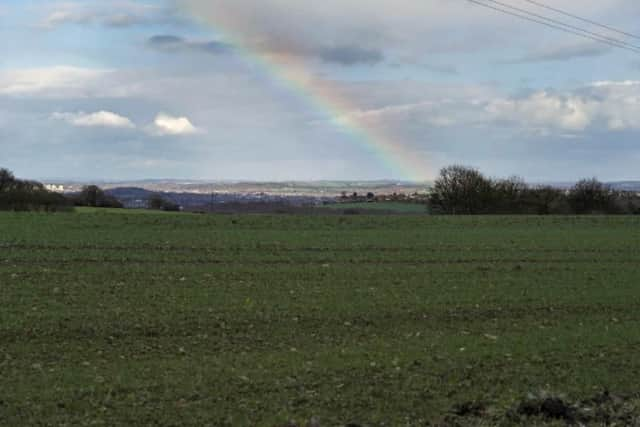
He said: “The proposal forms an important part of Coxley Valley. It is largely located on the elevated slopes of the valley and is open and undulating.
“There are a number of rights of way running though and adjacent to the site.
“These public rights of way, as you will hear, are well used by the local community.
“They also indicate the historic nature of this agricultural landscape.”
The barrister told the hearing that the site was now considered to be ‘grey belt’ land afterthe government published a revised national policy framework in December last year.
Deputy Prime Minister Angela Rayner introduced the concept as part of an overhaul of the planning system designed to free up some greenbelt areas for development.
The barrister explained that the council would no longer be able to assert that “very special circumstances” were required to allow the development to go ahead.
He added: “The council does still maintain that the appeal should be dismissed on the basis of the loss of best and most versatile land, landscape and visual impact, and the less than substantial harm to designated heritage assets.
“There does not appear to have been any consideration of alternative sites as part of this application.
“The landscape is at a tipping point in terms of its ability to accommodate change without undue consequences to its character.
“The development will introduce a highly conspicuous, regimented and industrial feature into a tranquil, open and prominent area which provides a setting to surrounding communities.
“This harm should be given significant weight.”
Mark Westmoreland Smith KC, for Boom Power, said: “We live at a time of climate crisis. Recent examples being the wildfires in California and flash floods in Spain.
“2024 was the hottest year since records began. In May of 2019, both the UK parliament and Wakefield Council declared climate emergencies.
“The council pledged to become a carbon neutral organisation by 2030 and for the district to become fully decarbonised between 2030 and 2038.
“It means low carbon energy needs to be deployed at unprecedented scale.
“If the ambition is to be achieved then we cannot turn down acceptable opportunities such as the one provided by the appeal site.”
Outlining the appellant’s case, Mr Westmoreland Smith said 1,100 solar farms similar to the one proposed needed to be delivered nationally to achieve the government’s target.
He said it was estimated that 37 solar farms would be needed across the Wakefield district to meet the council’s aims.
The barrister said there was also a “very real need for energy security” and to address the cost of living crisis in an “increasingly unstable geopolitical world”.
He continued: “Since Russia’s invasion of the Ukraine, Britain has experienced a devastating cost of living crisis, caused by our exposure to volatile fossil fuel markets.
“In an increasingly unstable world, our dependency on fossil fuels leaves us deeply vulnerable as a country.
“The scale and urgency for renewable energy is absolutely colossal.
“Sadly, there is no silver bullet. Nuclear, for example, can take ten to 15 years.
“Solar energy can be built out and operated in a very short time.
“It has a vital role, therefore, in keeping net zero and the government’s plans for green energy on track.”
Planning inspector Alison Partington said the main issues to be considered during the hearing included the impact of development on residents, the landscape and nearby heritage assets.
Ms Partington said the impact on road and public rights of way users would also be assessed, as well as the potential loss of agricultural land.