
Welbeck Landfill Site: Council withdraws key expert witness as public inquiry ends
Wakefield Council has withdrawn one of its expert witnesses from giving evidence at a public inquiry into the future of the city's rubbish dump.
The local authority also conceded key ecological and technical arguments raised at the hearing on behalf of the operators of Welbeck Landfill Site.
A week-long Planning Inspectorate case ended on Monday (November 25) and a decision is expected in the new year.
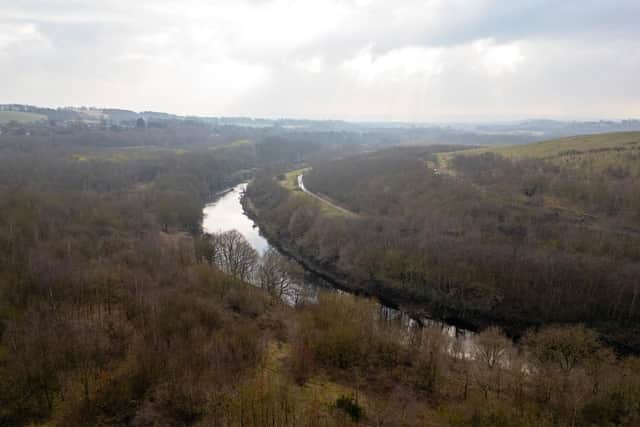
The site, which has been in operation for 27 years, is due to be transformed into a country park when the tip closes.
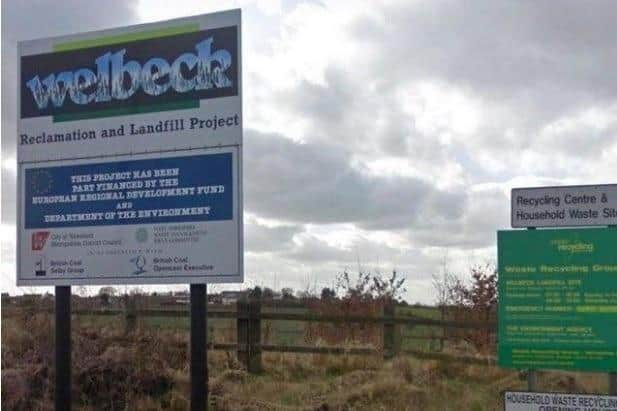

Welbeck Waste Management Ltd made a legal challenge when a planning application to continue dumping material at the site until the end of 2025 was rejected by the council's planning committee.
Reasons given for refusal included the impact of the tip on local residents and biodiversity.
The decision, made in November last year, meant that tipping would have to end on December 31, 2023.
The operator, also known as FCC Environment, also challenged an enforcement notice served by the council in January.
The company says it needs more time to fill the remaining capacity at the tip due to a reduction in the amount of materials going to landfill.
On Friday, the council's barrister Alan Evans informed the inquiry that it would not be putting its chief planning witness, Chris Whitehouse, forward for cross-examination.
Mr Evans also said evidence given to the inquiry by WWML's planning expert, Alistair Hoyle, would not be challenged and no closing submissions would be made.
Alison Ogley, the barrister for WWML, said the council had also failed to challenge evidence given by John Martin, an expert in landfill sites,
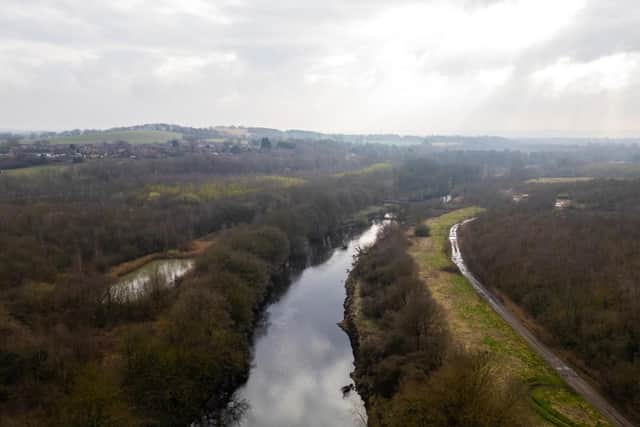
Mr Martin previously said shutting the site would leave a “ravine-like feature” at the site which would create a long-term pollution risk.
Mr Martin said best practice would be to fill the remaining void to create a “raised dome” to allow rainfall run-off.
During her closing remarks, Ms Ogley said: "There is no escaping the reality that this would result in a situation where non-hazardous landfill would significantly increase environmental risks.
"In particular, the likely significant increase in leachate (polluted water) production and landfill gas production, both of which arise from water entering the waste void.
"A consequence is that the leachate levels within the landfill site would be higher than those for which it was designed to be safe during its life.
"It would result in a significant and entirely avoidable risk that leachate would escape into surface or ground water.
"From the perspective of harmful impact on the environment, the appeal scheme wins hands down."
Ms Ogley said Mr Martin's assessment was also "agreed in full" by the Environment Agency.
She described the council's decision to challenge the appeal as "illogical and cavalier."
The barrister continued: "It is difficult to understand why the council did not understand the precariousness of its position in the appeal far earlier.
"Had the council engaged properly with the appellant's technical report, and the Environment Agency's position in respect of the same, it would have understood that its defence for the enforcement notice, and the reasons for refusal, were entirely untenable.
"It seems apparent that neither the council nor its witnesses fully understood the evidence of Mr Martin and the inevitable consequences."
Ms Ogley also made an application for the council to pay all legal costs of the case in full.
She said: "The council's case was fundamentally flawed from the beginning.
The appeals could and should have been entirely avoided.
"From the very outset of the appeal, front and centre was that there was no alternative.
"(WWML) drew the council's attention directly to the consequences which would follow if the appeal scheme was refused.
"It also made clear that it intended to call expert evidence on matters relating to landfill closure.
"The council was made aware at the start of the appeal of the importance of Mr Martin's evidence and it chose to ignore it."
A financial report in September forecast the council's legal costs for the appeal to be £200,000.