
Save the date: Wakefield prepares for annual trades union march, speeches and entertainment

This is paid for content and does not necessarily reflect the views of the Wakefield Express. This is an article written by the With Banners Held High organisers.
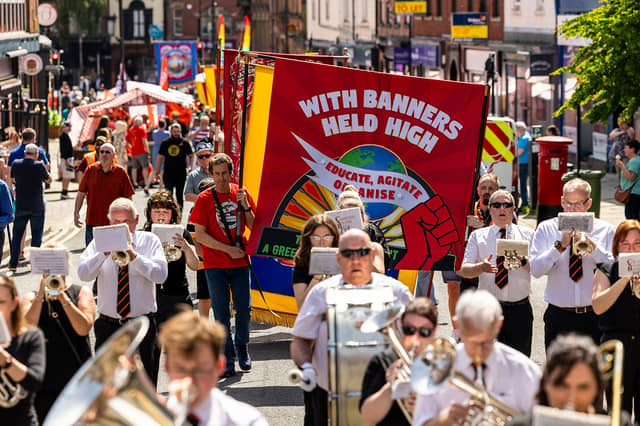
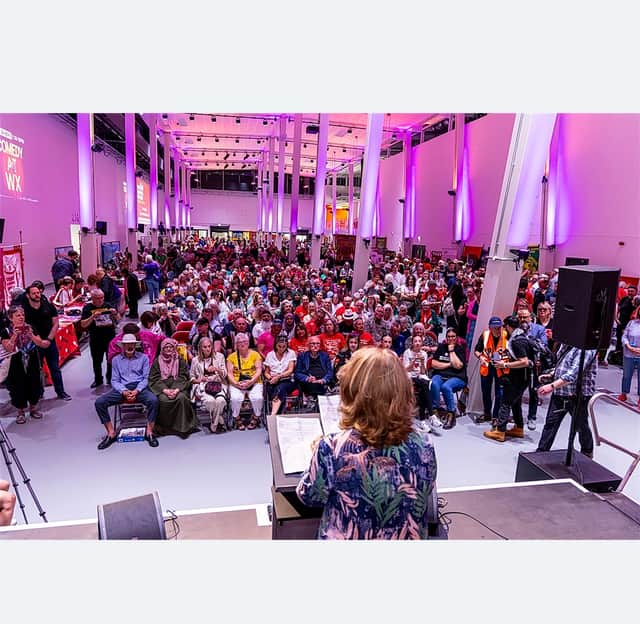
With Banners Held High takes to the streets of Wakefield again on Saturday, May 9, with a march of Trade Union banners and bands through the precinct at 11.30 am and culminating at Wakefield X where speeches, stalls and entertainment will commence from noon until 4.30pm.
With Banners Held High is the largest annual trade union event held in Yorkshire and is sponsored by RMT, UNITE and CWU along with other trade unions. This year's speakers include Sharon Graham of UNITE, Eddie Dempsey of RMT and Andrea Egan of UNISON. The theme of this year's event is the 100th Anniversary of the General Strike in 1926 and the continued struggle for workers’ rights.

Yorkshire’s union heritage
In Yorkshire the General Strike was an intense nine day stoppage rooted in the Coal Miners lockout over wage cuts and longer hours. The miners had rejected a 13% pay cut and an increase from seven to eight hours in the working shift. Other workers in rail, steel, transport and docks walked out in support and 1.7 million workers stopped working on May 2 in support of 1.2 million miners with over three million workers involved in some form of action. The Labour Party was divided in its support for the strike, especially leader Ramsay MacDonald who feared it would damage their electoral prospects. Even the TUC, who had called the strike, were persuaded to call off the strike after nine days causing bitterness within the movement, which left the miners to continue their strike alone for nine more months.
Miners united
It was the miners who would once again be left to defend British workers in industry and manufacturing against savage cuts to pay rises and conditions of service to maintain the competitiveness of British industry against foreign competition. Thatcher later deliberately tried to emasculate the Trade Union movement by destroying the mining industry with its strong trade union membership in 1984.
Shipbuilding, steel, and rail engineering would all later be allowed to crumble with lack of investment and government support as the Government abandoned UK manufacturing in favour of creating a services and financial economy.
Unlike in many European countries such a national strike would not be possible today since the Tory Party introduced the Employment Act of 1982 which outlawed secondary or sympathetic action by Trade Unions. A Trade Union could only call a strike if its members were directly involved in an industrial dispute with an employer. Strike action was made even more difficult with the 2016 Trade Union Act introduced stricter ballot thresholds for strike action, and after a decade of austerity and pay cuts in the public sector which led to a string of disputes in 2022/3 the Tories introduced the Strikes (minimum services) Act of 2023 which demanded a minimum level of services be maintained in public sector disputes.
Today’s issues
The last decade has seen continued austerity with huge cuts to public services and local government finances with inevitable consequences for workers standard of living.
Further to this the so called “gig economy” has affected job security, hours and pay levels. Zero hours contracts and fire and rehire practices have made millions of workers mere pawns in an attempt to drive down costs and increase profits for employers at the expense of job security and pay levels for workers.
New rights from Labour
It is against this background that the new Labour Government has introduced the Employment Rights Act of 2025, which will be delivered across 2026/7. This act gives enhanced protection to over 18 million working people.
After 14 years of Tory rule it is no surprise that the UK ranks among the worst of all OECD countries in terms of employment rights. This Act will move it more towards the average but there is still a long way to go to achieve the standards of Scandinavian and advanced EU countries. The act will roll back the draconian Tory Trade union Acts of 2016 and 2023 which will be repealed.
The national minimum wage is also increased and sick pay will be paid from day one.
The fact that workers are still being asked to take a pay cut in times of a cost of living crisis has still not gone away as in the case of the Birmingham bin workers who are disgustingly being asked to take a pay cut of £8,000 to help to pay for a bankrupt council!
Closer to home workers at the National Coal Mining Museum, who have previously put on an exhibition commemorating the General Strike of 1926 are ironically now on strike over a request for a modest pay increase and facing a management who seem willing to pay for security at the picket line, the cost of which would have settled the pay dispute and they appear willing to let the future of the museum be put at risk by their actions.
Indeed unrest and dissatisfaction with progress in easing the cost of living crisis has made many workers unhappy with both main political parties and turn to Reform thinking that they will somehow win back the country.
The fact that Reform have voted against the proposed improvements in workers’ rights in Parliament and defends zero hours contracts and called for a weakening of health and safety regulations at work shows that they are no friends of UK workers. Further to that Reform want to take away other citizens’ rights enshrined in the Human Rights Act, want to end public sector government run pensions and have voted against the increase in the minimum wage seems to have escaped many in their desperate enthusiasm for change.
The struggle continues.
Find out more on Facebook here.