
Column: Dr's Casebook" Dr Keith Souter: An Insight into Tutankhamun's Egypt
I attended an event in London this week and took the opportunity to visit the Tutankhamun Immersive Exhibition in the Docklands. It was an experience as the history of Egypt was recreated in a huge immersive hall with 360-degree video projections, a Virtual Reality headset took you on a journey through several tombs and a holograph room showing the mummification process.
I have been fascinated by Egyptology all of my life and first saw the famous Tutankhamun funerary mask in 1972 when it came to the British museum. Since then, I have seen it and many artefacts from the tomb in the old Egyptian Museum in Cairo, as well as visiting his tomb in the Valley of the Kings, where the king’s mummy is still in place.
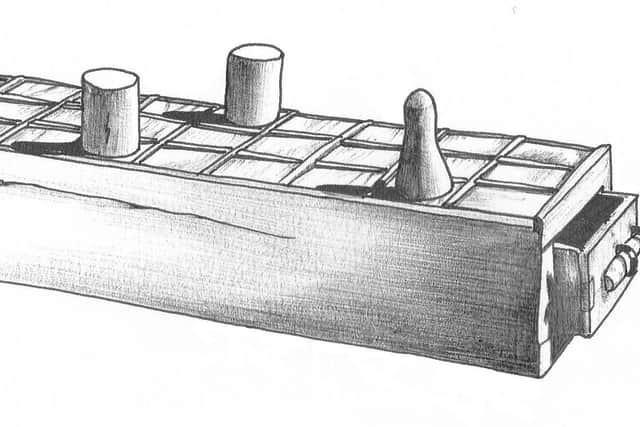
Among the objects found in the tomb is a beautiful small board game called Senet. It was played by two people, each of whom had five small cones that had to be moved around the board. In the exhibition there was a depiction of Tutankhamun and his young wife Ankhesenamun having fun playing the game together
Board games are fun but can also be good for you. I recently played chess with my six-year-old granddaughter, who had taught herself to play by watching Bluey cartoons on television. It was intriguing to see how quickly she had grasped concepts and strategies.

Published research has shown that playing board games may help to stave off dementia and Alzheimer’s. In one large study published in the Journal of the American Medical Association in 2018, almost sixteen thousand Chinese individuals of 65 years or older were followed up for five years. All of them were free of dementia at the start of the study. Over the five years nine percent developed dementia. However, it was found that daily participation in intellectual activities, including board games was associated with a significantly lower risk of developing dementia.
A second paper published a year before studied two thousand individuals aged 70 years and older over a four-year period. They found that those people who played board games at least once a week were twenty-two per cent less likely to develop Mild Cognitive Impairment than those who did not.
People have been playing games since the days of the pharaohs. They are fun, educational and it seems they may also help stave off cognitive decline.