
Dr's Casebook column with Dr Keith Souter: Let's look at collagen supplements
A colleague asked me about using collagen as there is so much advertising these days about its benefits to improve the skin and the joints.
It doesn’t take much scrolling to read about over the counter creams, lotions and serums to apply directly to the skin, and powders, liquids, capsules and tablets to take by mouth. The adverts usually have glowing testimonials, but how much is advertising hype, and how much benefit have scientific studies shown?
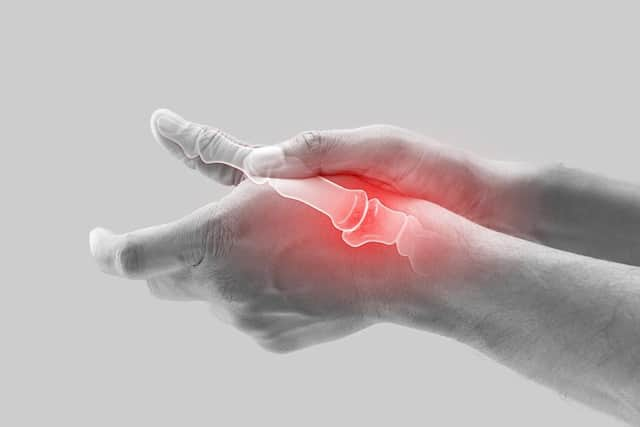

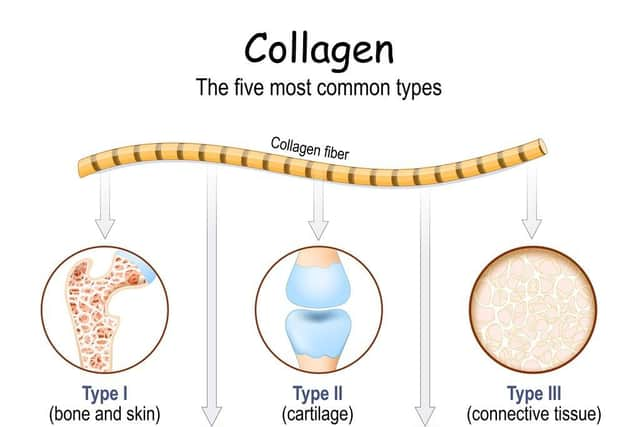
Collagen is a protein that has many important roles in the human body. It is the most abundant structural protein in the body accounting for about 30 per cent of protein. It provides strength and structure to bones, ligaments, tendons, cartilage and joints. It gives structure and elasticity to the skin and it protects organs. Essentially it is scaffolding for the body.
There are 28 types of collagen, but the most common ones are types I to IV. Type I makes up 90 per cent of the total collagen and it is found in bones, skin, tendons, artery walls, the cornea of the eyes, fibrous tissues and teeth.
Unfortunately, as we age so we produce less collagen and we lose it at a faster rate. It is at a peak level in teen years and starts to drop by about one per cent per year from the mid-20s onwards, that rate speeding up dramatically in women during the menopause. During that time women can lose about a third of skin collagen. Smoking and sun damage to the skin make this loss worse. Other adverse factors that speed up depletion of collagen are poor sleep, chronic stress, and diets high in sugar or low in protein and vitamin C.
Types of collagen supplements sources and targets
Collagen is an animal protein and supplements are derived from bovine from cows, porcine from pigs, murine from fish, and chicken sources. Vegan collagen does not contain collagen, but contains collagen boosting ingredients like vitamin C, amino acids and minerals that help the body to make its own collagen.
Now here is an important point, because the collagen you take in gets broken down in the body by the stomach and digestive tract into its basic amino acid building blocks. The body then reassembles them elsewhere into new collagen. Where that new collagen goes is not predictable, so it is potluck whether it goes to the skin, the tendons, joints or connective tissues. A particular supplement might suggest it helps joints or the skin, but while it may help, it cannot actually target particular tissues or joints.
Hydrolysed collagen
This is collagen that has already been broken down by a process called hydrolysis into short chains of amino acids called peptides. These are easier to break down further and therefore are better absorbed than raw collagen. There is no ‘best’ collagen supplement. It really is personal preference, but hydrolysed is better absorbed.
Skin preparations
It is often suggested that these can reduce or stop wrinkles. They cannot, but what they can do is plump up the skin. The collagen cannot be absorbed into the skin, but lies on the surface acting as a very good moisturiser. So, it will possibly produce a cosmetic improvement, but it is not because the collagen is absorbed, it is not.
The science
A major umbrella review this year of collagen supplements for skin and musculoskeletal health was carried out by researchers at Anglia Ruskin University. This umbrella review means that they brought evidence from 16 reviews of 113 randomised trials involving almost 8,000 people from around the world, taking supplements daily for three months or more. They found modest improvements in skin but there was no quick result.
They were able to identify dose-dependent and duration-dependent effects, revealing that longer supplementation is linked with greater improvements in skin elasticity and hydration. They also found some benefit in osteoarthritis, including reduced pain and stiffness.
They also found modest benefits for muscle mass and tendon structure, offering further support for the role of collagen in healthy ageing. There may be some benefit to gingival thickness in gums, but it too was very modest.
On the other hand, they found no improvements in post-exercise muscle recovery, soreness or tendon mechanical properties. This suggests that collagen is not effective as a sports performance supplement.
The takeaway seems to be that regular supplements do provide modest but statistically significant improvements in skin elasticity and hydration, but they won’t stop wrinkling. Similarly, there may be some improvement in pain and stiffness, but they won’t enhance sport performance or recovery after exercise.