
Dr's Casebook column with Dr Keith Souter: A pioneer of immunology - Lady Mary Wortley-Montagu
Back in May I wrote about my visit to the historic market town of Berkeley in Gloucestershire where I went to see Dr Edward Jenner’s Temple of Vaccinia. Dr Jenner’s discovery of vaccination in 1796 was one of the greatest advances in the history of medicine, and the museum in the house where it all began is well worth a visit.
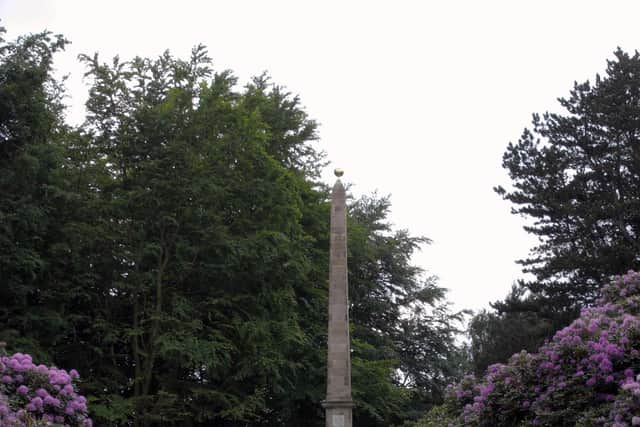
During the pandemic I did a series of articles in this column about the history of vaccination and the gradual development of the Covid-19 vaccine at the University of Oxford. Last week I went to Wentworth Castle in South Yorkshire, a National Trust property where there is an impressive tall obelisk, called the Sun Monument, which is topped with a golden orb. It is framed by an avenue of trees. It is dedicated to Lady Mary Wortley-Montagu (no ‘e’) for introducing smallpox inoculation to England from Turkey. She is a relatively unknown hero of the history of immunology.

The Sun monument
The obelisk was erected in about 1736 by William Wentworth, second Earl of Strafford, who was an admirer of Lady Mary. His Wentworth Castle estate bordered her husband's at Wortley Hall in South Yorkshire.
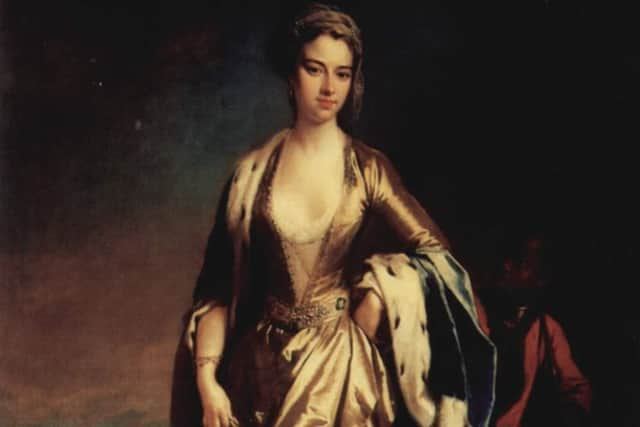
Lady Mary (1689-1763), was a writer, poet and adventurer. As the wife of the British Ambassador to Turkey she lived in Constantinople, modern day Istanbul. Her husband was an unremarkable ambassador and it is alleged that she would have been more successful in the post than he. She learned Turkish by infiltrating the harem of Sultan Ahmed lll and learned about all of the political machinations behind the scenes, which were hidden from her husband.
Variolation
While living there she heard about a process called variolation that had been used in China since the 10th century AD, and which merchants brought back to Turkey. It was in effect a primitive form of vaccination against smallpox. It involved exposing healthy non-infected people to the scabs of people who had smallpox. These were either put under the skin or powdered and inhaled up the nose like snuff. Variolation certainly seemed to protect against smallpox albeit, it was not completely safe.
She had her six-year-old son variolated and was so convinced of its efficacy that back in England in 1717 she persuaded the authorities to permit a hazardous experiment. A group of convicted prisoners and orphaned children were given variolation and a few months later were deliberately exposed to smallpox. None of them contracted the disease and the procedure was deemed to be safe. Several members of the royal family were inoculated, the result being that variolation became fashionable. It gave some protection until 1796 when Dr Jenner discovered vaccination.
The experimental ‘trial’ of the method would of course be considered totally unethical today, as indeed would Dr Jenner’s, yet they did ultimately save countless lives. They both began the journey that ended in 1980 with the global elimination of smallpox.