
Inside Pontefract’s Counting House: Bar dates back to a time of witches trials and darkness
It’s a building steeped in history from a time when witchcraft was considered a real threat and a candle would be the only thing that could light a room at night.
Artefacts and fittings from as early as the 17th century are all over the walls and in the corners of The Counting House in Pontefract.
The building is fresh from a restoration that brought it back into use as a bar and restaurant, but it also has the essence of a museum.
Hours of painstaking work from owner Guy Lister, alongside tradesmen and volunteers, resulted in a window into Pontefract’s past.
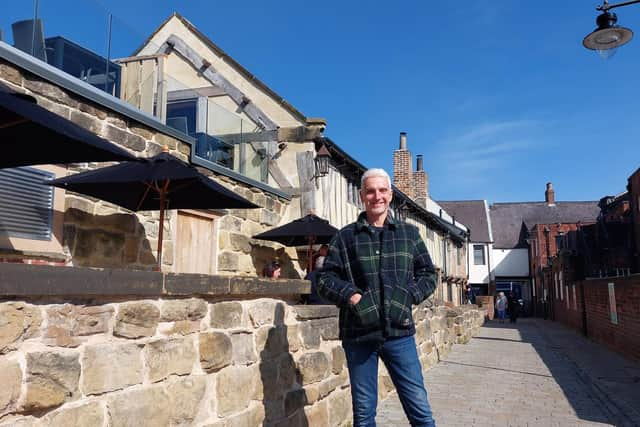

Guy looks at the building within the context of societal change following the English Reformation, and what the lives of the people who lived and worked there would have been like.
He said: “This building was built in 1609, we know that in 1649, 40 years later, Oliver Cromwell dismantled the castles and the things that were going on in that period included the height of witch hunts.
"People believed if anything went wrong there was a witch behind it, or a wizard.
"The method of dealing with alleged witches was ducking, so if you drowned you weren’t a witch and if you didn’t you were, so you were knackered really.”

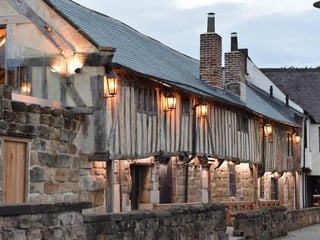
A handful of garments from the era were found in the building during its restoration and they have been put on display.
Guy said: "The clothes are part of what was going on in that era. People who lived in this building would have worn them.
"There’s not many buildings where you find the fabric of the occupants."
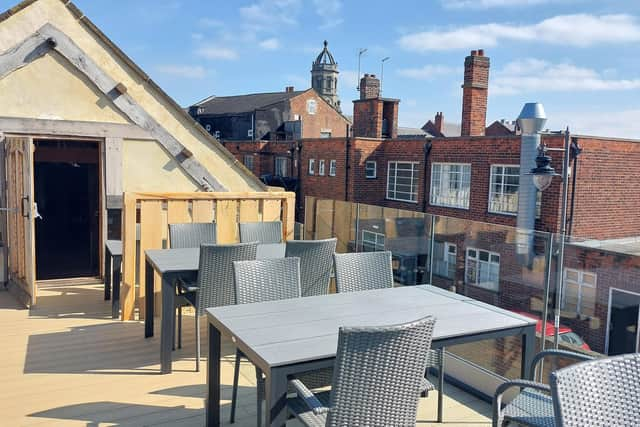
As part of the restoration, traditional staircases were constructed on the outside in the same style as the main building.
A terrace with glass panels was created and a lounge was installed upstairs, near an original servants’ fireplace, with two more fittings downstairs.
There are uneven, original parts of the floor where it effectively means walking downhill.
There are two set pots builts into the walls of the downstairs floor – an 1800s deep stone cauldron with a stove beneath, used for cooking or washing clothes.
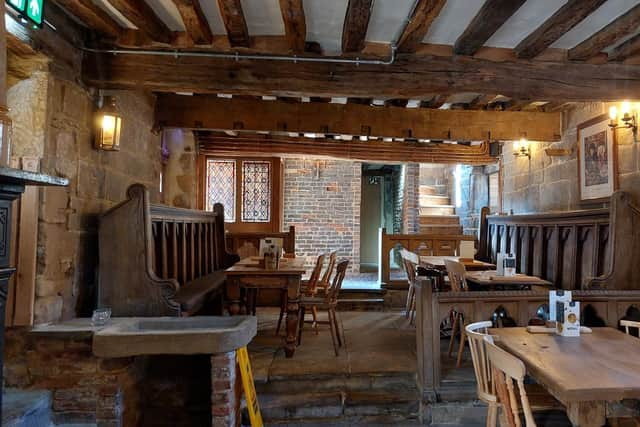
And an enlarged, backlit, map of Pontefract is mounted behind the back wall of the downstairs bar.
Guy said: "It’s been an epic journey and I’m pleased to have more or less finished it.
"I love the map behind the bar but what I keep coming back to is the garments we found.
“In the 1600s, when night fell you either had a candle or you’re in the dark.
"Someone lived here, probably worked here, in those dark days when they believed that spirits were coming down the chimney.
“And all the stories your parents would have told you – that’s all there would have been to believe. Those beliefs probably lasted for generations.”
Guy had a blue plaque installed on the front of the building to commemorate the work on the Counting House his father, Malcolm, also an architect, began.
He described it as a “task he started but never quite finished”.
Volunteers who worked on the building and made the furniture will continue to work under the Swales Yard Handmade label and will make bespoke furniture.
The bar held its grand opening at the weekend.