
Jon Trickett MP: My advice to the Labour government for 2026
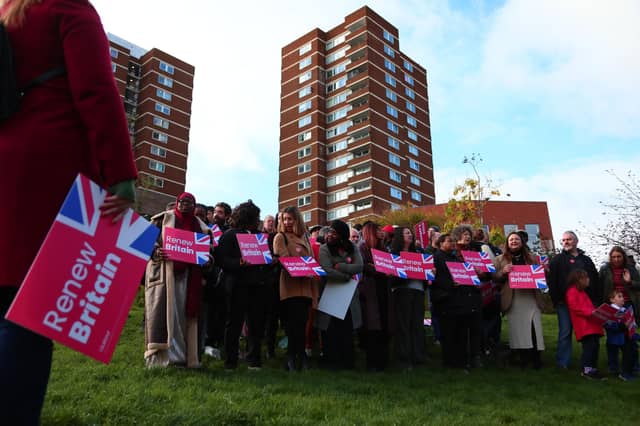

British politics is stuck in a rut. For decades, governments of different stripes have warned that bold and transformative ideas are unelectable. Too many Labour leaders have absorbed that message, settling for minor reforms and managerial “competence”.
But this view is wrong. Most people in Britain understand that our country needs a transformative Labour government to get our country out of the mess that 14 years of right wing Conservative government left us in.
Polling tells a clear story but it is being ignored. Public consent for the UK’s political and economic settlement has collapsed. This is not just a reaction to one poor government. It is the accumulation of decades of market-driven policies that have failed the working class majority of Britain. OECD data shows that only 12 per cent of people trust political parties, and barely a quarter trust the national government. Other studies suggest confidence in the entire British political system is in single digits, with overwhelming support for constitutional reform.
The same is true of attitudes to the economy. Large majorities believe it is unfair and works in the interests of the wealthy. IPSOS found that nearly three-quarters of Brits think the economy is “rigged to advantage the rich and powerful”. People see wages lagging, bills rising and public services withering away. They, correctly, blame a system that works for a privileged few and against the many.

Support for change is mainstream. Most people believe wealth is distributed unfairly and that inequality is too high. Nearly four in five support a modest wealth tax on multimillionaires. There is strong backing for higher taxes on large corporations and for the principle that those with the broadest shoulders should bear the heaviest burden.
The cost-of-living crisis has sharpened public anger at what has been called “greedflation” by Unite the Union. This is where dominant companies – often monopolies – use their market power to push up prices for consumers. That is why there is widespread support for targeted price controls, as well as rent controls and large-scale council house building.
The same applies to public ownership. Voters consistently back taking failed monopolies – such as the privatised water companies – back into public hands. This is not just about ideology. It is a pragmatic response to privatisation that has failed to deliver any of the benefits that Thatcherite politicians said it would.
The only way to avoid the path of decline that right wing forces have set Britain on is to deliver a new economic settlement that works in the interests of the working class.
My advice to the Labour government is simple. The country is not crying out for better management of a broken system. It wants a different one. The task now is to speak clearly, confidently and in the language of the majority of ordinary working men and women in our country. Most importantly, the task is to deliver the change people so desperately want and need.