
The Rhubarb Triangle: Inside the heart of Wakefield's beloved pink vegetable ahead of the world-famous Rhubarb Festival
Here is everything you need to know about the district’s favourite vegetable ahead of the return of the world-famous Rhubarb Festival.
Wakefield sits at the heart of West Yorkshire’s renowned Rhubarb Triangle, famous for producing early forced rhubarb.
The Rhubarb Triangle covers a nine square mile area of West Yorkshire with the three corners of the triangle roughly equating to Leeds, Bradford and Wakefield.
The process of forcing rhubarb was discovered in Chelsea in 1817, when some roots were covered with manure over winter and it was noticed new tender shoots appearing which were tastier than anything grown before.
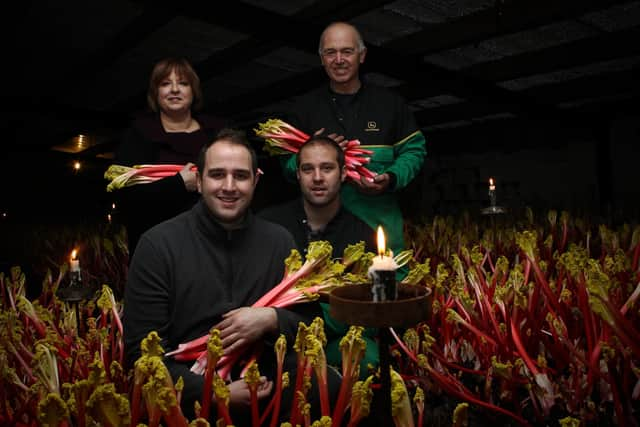

Soon, the success in the south inspired the Whitcliffe family of Leeds to begin the first mass market commercial growing of rhubarb in 1877, erecting special sheds to grow rhubarb out of season.
West Yorkshire has ideal nitrogen rich soils for the growing of rhubarb root systems, and after the success of the Whitcliffe family business at one point Yorkshire had more than 200 rhubarb growers.
The rhubarb plants spend two years out in the fields without being harvested. While in the fields the plants store energy from the sun in their roots as carbohydrates.
The roots are then subjected to frost before being moved into sheds in November where they are kept in complete darkness.
From January to March, the pink forced rhubarb is then picked by hand, by candlelight, so that the delicate stems are not turned green and hard by photosynthesis.
The rhubarb industry continued to thrive within West Yorkshire with the ‘triangle’ once producing 90 per cent of the world’s forced rhubarb prior to World War Two.
Technically a vegetable, but eaten as a fruit, the rhubarb was one of the few options available during rationing.
The success of the rhubarb industry in Yorkshire meant a whole transport industry set up around it – with special trains leaving nightly to ship large valuable cargoes of rhubarb down to the old Covent Garden Market.
Despite declining in popularity over the last century, in 2010 the triangle received a protected status and has enjoyed a revival in popularity since.
The Rhubarb Triangle Farm in Wakefield is at the heart of the Rhubarb Triangle and continues to grow and harvest hundreds of rhubarb each year.
The Dobson family, owners of the farm, have been farming since 1815 and have served the local community with vegetables for over five generations.
John Edward Dobson, forced some of the first ever Yorkshire rhubarb in the hay loft above the farm’s cows, using the rising heat from the animals to force the rhubarb and bring it to market early.
Current owner Simon Dobson, and his management team felt it was quite fitting, as they played such a major part in the history of Yorkshire Forced Rhubarb, that the farm be renamed The Rhubarb Triangle Farm Shop.
Another defining rhubarb farm is E Oldroyd & Sons Ltd, which has five generations of experience in Yorkshire forced rhubarb production.
Director Janet Oldroyd-Hulme has become known as the ‘high preistess of rhubarb’ and works alongside her husband and two sons to produce some of Yorkshire’s highest quality rhubarb.
She said: "It's a three-year period to get the crop that we do and we've got to keep propagating – it’s a continual process.
"So not only are we busy harvesting rhubarb, in three weeks time, we'll be emptying some sheds of the roots that are in there and refilling them again.”
Oldroyd’s farm first became a tourist attraction in 1997, initially designed for group bookings – where vistors can take a tour of the farm and learn about the growing process.
The tours have been stopped temporarily but will return next year.
Janet continued: “We’ve not forgotten about the tours!
"They have become really popular since they launched and visitors do enjoy learning about the Rhubarb Triangle and its history – of which there is plenty.
"They are delayed at the moment but will return next year”.
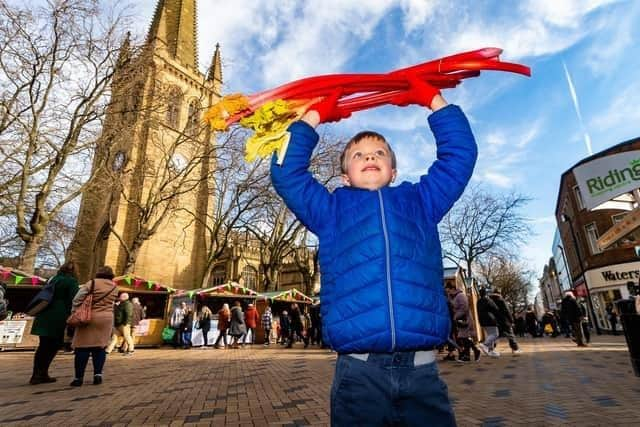
The Rhubarb Triangle became so popular that eventually a whole festival was based around the tours in 1999, so that individuals and families can also see the forced rhubarb growing in the dark being harvested by candlelight, and learn the incredible history associated with this plant.
Wakefield’s claim over the pink vegetable alongside Oldroyd’s tours inspired the town to continue the annual Rhubarb Festival as the harvest ends, recognising the success of the triangle and using some of the incredible rhubarb to make delicious dishes for the community.
The festival, which has now become a staple within the community, has also helped in increasing the love for and demand of the vegetable, with hundreds heading to Wakefield to enjoy and celebrate the rhubarb industry.
This year, the festival is set to be larger than ever, featuring a weekend full of rhubarb related fun – with a huge stall from E Oldroyds & Sons.
The annual event will bring the city centre to life this weekend with a full programme of family workshops, comedy nights and the famous food and drink market.
This year, the market will also includes stalls from the Yorkshire Chocolatier, The Great British Cheese Co, H Hoffmann & Sons and La Focaccia.
Furthermore, there will be be a variety of demonstrations from celebrity chefs including Wakefield’s own Bake Off star, Karen Wright, double BAFTA award winning TV presenter and home chef, Sam Nixon, and award-winning chef Rachel Green.
There will also be live music, programmed by Wakefield Music Collective, which will be on every day at the Rhu-Bar, with a variety of local pop, folk, and rock artists to enjoy.
Finally, the festival will see the return of the famous Rhubarb Food and Drink Trail around Wakefield city centre.
This trail has become an annual firm favourite of festival visitors – allowing visitors to sample rhubarb cocktails, pastries and dishes from local bars, restaurants and cafes.
The festival will return this weekend, from February 21 to February 23.