
Doctor's Casebook column by Dr Keith Souter: That rotten egg smell may be the key to antibiotic resistance
I recently came across a pack of practical jokes, which included a set of three stink bombs. You may remember having been in a room when some practical joker set one off.
When broken, these little vials allow the nasty bad egg odour of hydrogen sulphide, chemical formula H2S, to diffuse quickly through a room.
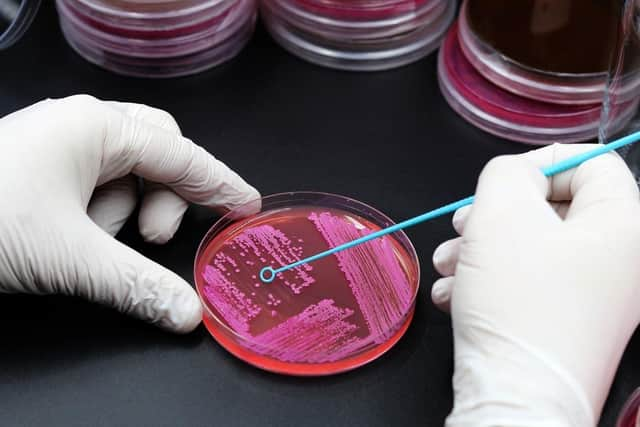

They are really quite harmless, the quantities of the substance being so small that they can’t harm anyone.
Stink bombs have been used throughout history, because they produce an unpleasant smell that makes people want to depart from the vicinity. Interestingly, Leonardo da Vinci invented a type that could be fired with an arrow.
The unpleasantness of the bad egg odour of hydrogen sulphide made people intuitively feel it was bad for health. Indeed, studies as long ago as 1803 demonstrated that the gas was injurious to humans and animals.
Naturally enough, since it was associated with sewers, septic tanks and as weapons of war during World War One, the emphasis of scientific research was on its toxicology.
It is known that when life began on earth about 3.8 billion years ago, hydrogen sulphide was abundant and the atmosphere contained little oxygen. Primitive bacteria utlised sulphur and broke it down to release hydrogen sulphide.
Then 2.5 billion years ago the great oxidation event occurred and lifeforms adapted to oxygen. Yet many bacteria still do produce hydrogen sulphide.
There has now been a steady increase in the amount of research on hydrogen sulphide away from toxicology and towards the physiology of micro-organisms including various hydrogen sulphide producing bacteria. Current research is looking at this very seriously, since it may have a part to play in reducing resistance of some bacteria to antibiotics.
Antibiotic resistance is a huge problem for humanity. The WHO has predicted that the deaths attributable to infection with bacteria resistant to antibiotics could rise to ten million per year by 2050.
It seems that the production of hydrogen sulphide produced by certain bacteria acts as a shield against antibiotics. An enzyme called cystathionine γ-lyase (CSE) is the main producer of H₂S in dangerous pathogens like Staphylococcus aureus and Pseudomonas aeruginosa.
Other research shows that blocking this enzyme stops the bacteria from producing the H₂S so they lose their shield and they become more susceptible to antibiotics. This research is on-going as it offers hope.
The bad smell of the stink bomb practical joke may turn out to be a powerful weapon against antibiotic resistance.