
Dr's Casebook column with Dr Keith Souter: Why those sudden loud fireworks can be painful
Have you ever cringed when you have heard the sudden bang of a firework or rocket?
On Bonfire Night you are expecting them but at other times that sudden loud noise coming out of the blue can make you cringe, and it can even make your ears hurt. When this happens you may have noticed that immediately afterwards you either went deaf for a few moments or your head hurt, or you heard a ringing noise. Then it quickly cleared. We usually describe these as deafening sounds.
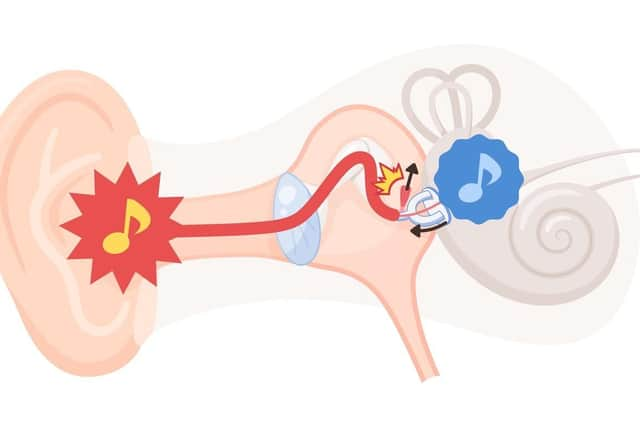

The acoustic reflex
When this happens you may be surprised to know that it is the interaction between the smallest muscle in the body and the smallest bone, which protect you. The muscle is called stapedius and the bone is your stapes. You have one of each in both ears.
The stapedius muscle is only about a millimetre long. That is tiny, considering that a five pence coin is 1.7 millimetres thick. Its purpose is to limit the vibrations in the ear when you hear these very loud sounds. It does so by stabilising the stapes bone in the middle ear.
You actually have three small bones in the middle ear chamber called the ossicles. Their individual names are the malleus, incus and stapes, or in English the hammer, anvil and stirrup. The stirrup is the one that is in contact with the ear drum. When the stapedius muscle contracts it stabilises the stapes and limits the very loud noise by tightening the three ossicle bones. This prevents damage to the bones and the ear from these very loud noises. This is called the acoustic reflex.
Sudden loud noises overwhelm the acoustic reflex
The stapedius muscle is supplied by a special branch of the seventh cranial nerve, which is known as the facial nerve.
The acoustic reflex is actually a neural loop. This means that the sound must hit the ear, travel to the brainstem, which sends a signal back by the special branch of the facial nerve to contract the stapedius muscle. This takes roughly 40 to 150 milliseconds
A firework blast is an "impulse noise". It reaches its peak, deafening volume almost instantly. The effect is that the sound wave passes through the stapes and hits the inner ear before the stapedius has time to contract and protect it, causing physical shock and acute pain.
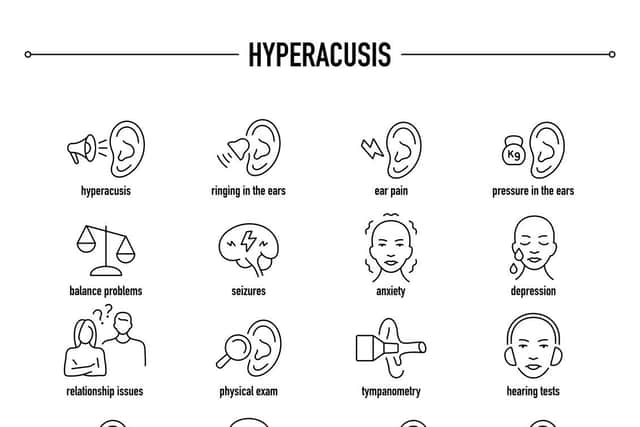
Hyperacusis
This is in fact why Bell’s palsy, a temporary paralysis of one side of the face (supplied by the facial nerve) is often followed by hyperacusis. This is a condition that affects how sounds are perceived and because the stapedius doesn’t work properly there is no damping effect from it on the stapes. Loud noises and even everyday noises like telephones can hurt. If you are subject to this, then there are treatments that your doctor can advise about, like sound therapy and CBT which might help. Hearing aids can also be tweaked.